The sponsor who paid for your lanyards last year is asking a different question this year. Not “where was our logo?” but “what did we get?” If your answer is a photo of the registration desk and an estimate of footfall, the renewal conversation gets harder every cycle.
That is the filter we applied to this list. All 37 ideas below are creative sponsorship ideas for events, but they are sorted by what the sponsor can show their own finance team afterwards: impressions, usage, participation, content, data or booked meetings. The further down the list you go, the more the sponsorship ends in a calendar entry instead of a banner. We have kept the examples that still work, retired the ones that have not aged well, and added the formats that sponsors are actually buying in 2026.
A sponsorship idea is worth exactly the number the sponsor can report. Everything else is decoration.
What sponsors buy in 2026
The person deciding on your renewal is rarely the marketing manager who signed the first contract. It is the finance lead who asks that manager for evidence. The Showcare Event Sponsorship Pulse Report 2026, a survey of association sponsorship teams, puts the problem in numbers: almost 60 per cent of teams measure sponsorship ROI (return on investment) inconsistently, 40 per cent say a missing consolidated reporting tool is their biggest barrier, and only 22 per cent use dedicated sponsorship software. For you as the organiser, the consequence is simple: whichever ideas you pick, the sponsor will struggle to prove their value unless you build the proof into the package.
Sponsor reality 2026
Why proof decides renewals
The same survey found that targeted, personalised opportunities have overtaken volume-based exposure as the top sponsor expectation. Eventeny’s 2025 sponsor trends research adds the organiser side: 24.6 per cent of organisers named securing sponsorship as their single biggest event marketing challenge, ahead of engagement and content. Sponsors are harder to win and harder to keep, and the ideas that help most are the ones that come with their own evidence.
Six types of event sponsorship, and the proof each one delivers
Before the list, a short map. Almost every sponsorship idea falls into one of six types, and each type produces a different kind of proof. If you know which proof a sponsor needs, you know which section of this list to open.
| Type | What the sponsor gets | What they can report afterwards |
|---|---|---|
| Visibility | Logo, stage time, signage | Impressions, brand recall from surveys |
| Infrastructure | Wifi, charging, shuttles, badges | Usage counts, positive association |
| Experience | Lounges, dinners, activations | Participation, dwell time, social reach |
| Content | Sessions, streams, research | Session attendance, views, downloads |
| Data | Surveys, audience reports, opt-ins | Qualified contacts, segments |
| Meetings | Scheduled 1:1s, matchmaking slots | Meetings held, opportunities, pipeline |
Most events sell heavily from the first two rows and struggle to renew. The last two rows are where the strongest renewals come from.
Visibility and stage presence
Visibility still matters, and it is still the entry ticket for most sponsors. The difference in 2026 is that visibility should carry a message, not just a logo.
1. Put the sponsor on stage for sixty seconds
Instead of a logo slide before the keynote, give the sponsor one minute with a real story: a customer result, a question they want the audience to think about, a problem they solve. Brief them hard on length and tone. A sixty-second story is remembered; a logo loop is not.
2. Sell content slots on the video wall, not the wall itself
A video wall is a canvas, and canvases are more valuable with a schedule. Sell timed slots between sessions for short sponsor clips, live polls with the sponsor’s question, or the leaderboard of a sponsored challenge. The sponsor reports airtime and poll participation instead of “we were on the wall”.
3. Wayfinding and floor graphics
Every attendee reads the floor at least once an hour. Directional signage, floor arrows to the main stage and the coloured lines to the meeting area are prime sponsor real estate that nobody switches off. Keep the sponsor’s colour, drop the slogan, and the sponsor still owns the route.
4. One oversized product instead of ten roll-ups
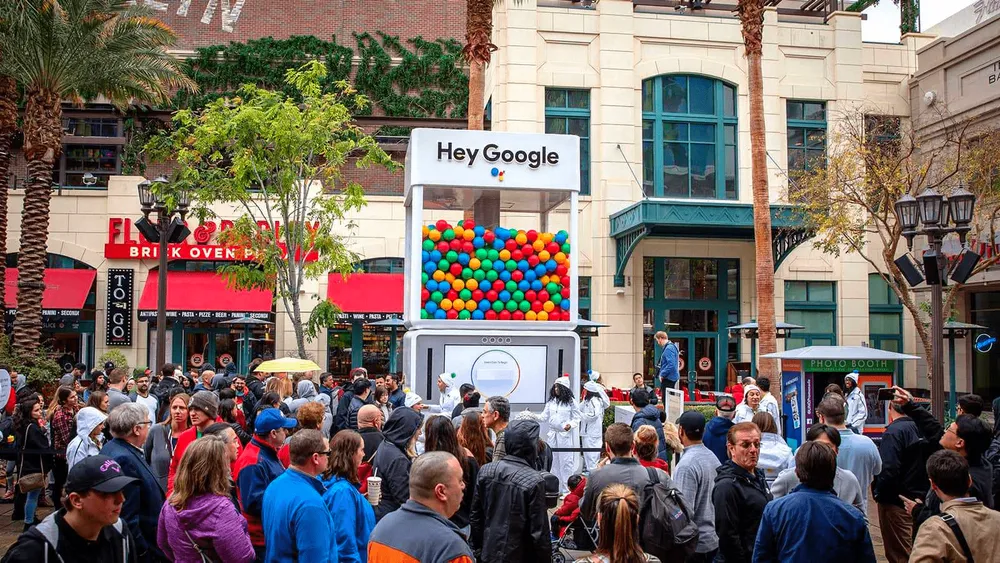
Google’s gumball machine at CES, equipped with the Google Assistant, let visitors ask a question in exchange for a prize. One prop, one interaction, one photo that travelled. Scale beats quantity: a single oversized version of the sponsor’s product creates more photos than a wall of banners.
5. Ceiling, truss and light
The space above people’s heads is the only space at an event that is never blocked by other people. Truss lighting in the sponsor’s colour, hanging banners and projected patterns on the ceiling of the plenary work even in a crowded hall.
Non-booth sponsorship ideas: infrastructure attendees actually use
Non-booth sponsorship means sponsoring something the event needs anyway, and attaching the sponsor’s name to the moment the attendee is grateful for it. It is the category sponsors underprice most often, because the value is utility rather than square metres. Non-booth ideas are also the simplest to report: the wifi login counts itself.
6. Wifi that people log into
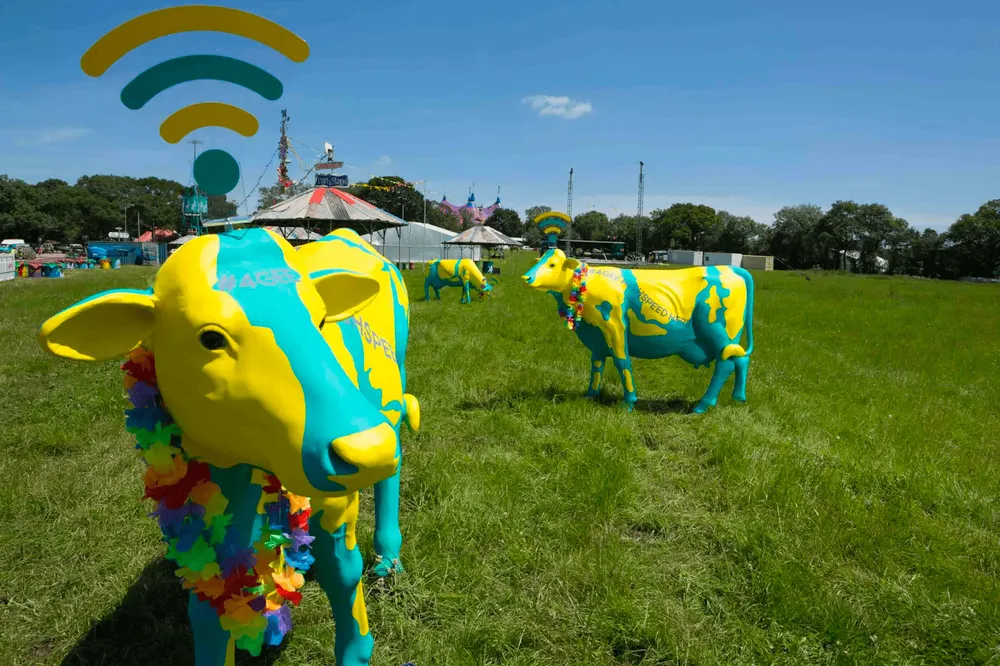
The sponsor’s name is on the login screen of every phone in the building. Glastonbury’s “Moobile” hotspots in the shape of cows turned a utility into a conversation. Report unique logins per day; that number is the audience.
7. Charging stations and lockers
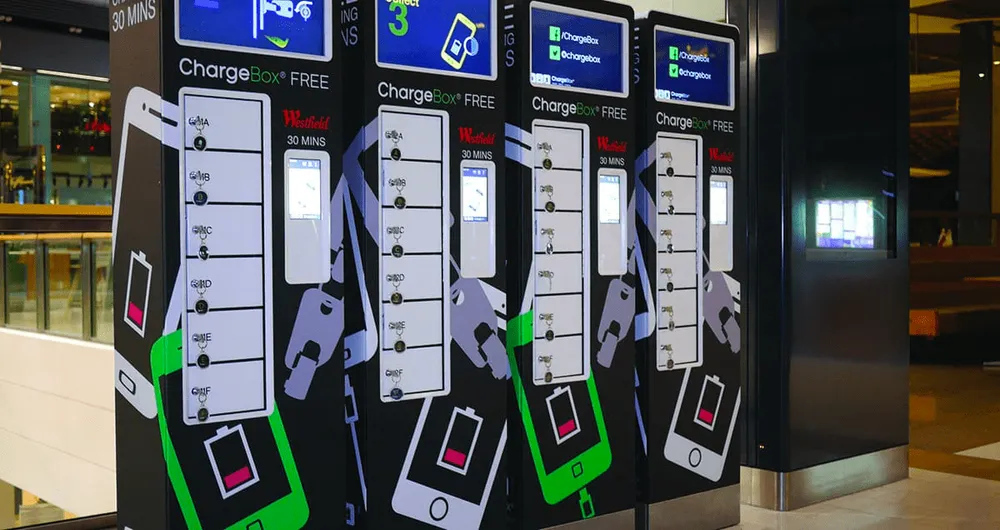
A dead phone at a conference is a small crisis, and the brand that solves it earns real gratitude. Lockable charging lockers, like the ChargeBox units at music festivals, add a second benefit: the attendee comes back to the same spot twice.
8. Shuttles and transfers
The hotel shuttle is ten to fifteen minutes of captive, relaxed attention, twice a day. A short video on the bus screen, a seat-back card and a greeting from the driver cost less than a booth and reach every out-of-town attendee.
9. Registration and badge printing
The check-in desk is the first physical touchpoint of your event and the one moment every single attendee passes. Sponsor branding on the kiosks, the badge stock and the confirmation email pays for the hardware, which is why we treat it as a revenue line in our guide to event check-in and badge printing.
10. Lanyard front, badge back
Lanyards are the classic. The badge back is the upgrade: a QR code to the sponsor’s meeting booking page or a session voucher turns a passive item into a tracked action.
11. Water and coffee refill stations
Refill stations replace single-use bottles, which most venues now expect anyway, and they place the sponsor at the spot people return to every ninety minutes. Branded reusable bottles from the sponsor complete the loop.
12. Cloakroom and luggage room
On the last day, everyone drops a suitcase somewhere. A sponsored luggage room with a small screen and a branded ticket is cheap, useful and remembered at the exact moment attendees decide whether the event was well run.
Networking, comfort and experiences
Sponsors have moved from wanting to be seen to wanting to be part of the experience. Experience ideas produce the second-best proof after meetings: participation numbers and dwell time.
13. The sponsored lounge
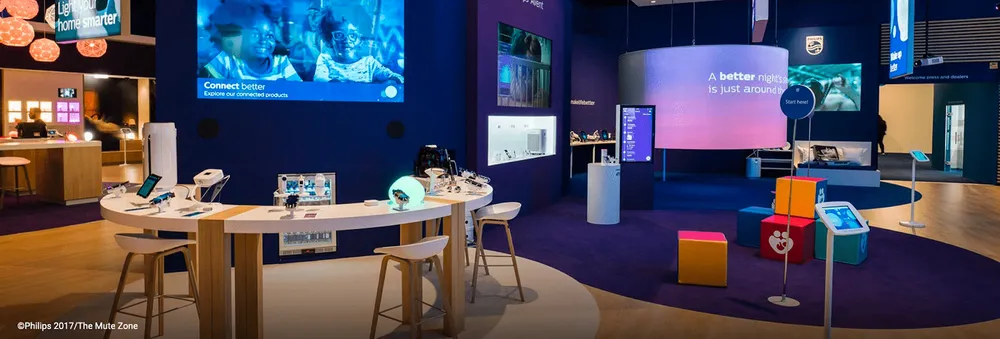
A lounge is where attendees recover between sessions, and recovery is a good mood to associate a brand with. Seating, decent coffee and power sockets do most of the work. Count visits with a badge scan at the entrance and the sponsor gets a real number.
14. Quiet zone and wellness corner
A quiet room, a stretching session before the first keynote or a five-minute massage station between blocks. Wellness sponsorships resonate because they show care rather than sales pressure, and they photograph well.
15. Hosted topic tables at lunch
Ten round tables, each with a topic card and a sponsor host who moderates instead of pitching. Attendees pick the table by topic, the sponsor meets fifteen relevant people in forty-five minutes, and you report table occupancy per topic.
16. Side dinners and executive roundtables
Curated dinners for twenty people around a defined theme are the format with the highest return per pound in many B2B programmes. Vendelux documented one CISO dinner alongside a large conference with 22 confirmed attendees out of 28 invited, eight of them stalled target accounts, three of which became opportunities within sixty days. Small format, measurable result.
17. Sponsor of the speed networking round
A structured speed networking round produces dozens of short conversations in thirty minutes, and it produces a participant list. The sponsor opens the round, hosts the bell and receives the anonymised match statistics.
18. First-timers’ welcome hour
Twenty to thirty per cent of most conference audiences are attending for the first time, and they are the ones who feel lost on day one. A welcome hour hosted by a sponsor, with a short orientation and a guaranteed first conversation, buys loyalty from the people who will decide whether they come back.
Meetings and matchmaking: sponsorship that ends in a calendar entry
Everything above delivers attention. The ideas in this section deliver appointments, and that is the proof most sponsors are missing. In our own programmes the meeting programme is the one sponsorship asset for which the sponsor can name the people they met and what happened next.
19. The sponsored meeting lounge
A dedicated area of two-seat tables with a hostess desk, a booking screen and a published schedule, carrying the sponsor’s name. Unlike a booth, every table is in use for a defined slot, and the schedule is the report: meetings booked, meetings held, no-shows.
20. Guaranteed meeting slots inside the package
Put a number in the Gold tier: “eight pre-scheduled 1:1 meetings with attendees matching your criteria”. Hosted-buyer programmes have sold this for years to exhibitors; sponsors value it more because their alternative is a badge scanner. For the mechanics, see how hosted-buyer programmes schedule meetings before the doors open.
21. A sponsor category in the meeting matrix
When your matchmaking runs on a meeting matrix (who can meet whom, when, where), the sponsor becomes a participant type with its own rules: matched only with attendees who have opted in to vendor meetings, capped per day, tracked separately. The sponsor gets qualified conversations and the attendees keep control.
Solution: Converve’s B2B matchmaking platform treats sponsors as a participant group in the meeting matrix, so meeting requests, acceptances and held meetings are reported per sponsor without a separate tool.
22. Pre-scheduled meetings before the event opens
The best sponsorship result Vendelux found in its 2026 case collection was not a bigger stand. Voltage reported a 300 per cent increase in late-stage pipeline after it made pre-event meeting booking a non-optional part of every sponsorship. Open your meeting scheduler four weeks before the event and sell the sponsor a filled calendar, not a hope.
23. Title sponsor of the meeting programme
If the meeting programme is the most valuable thing at your event, name it. “Meetings powered by X” on the schedule, the booking confirmations and the meeting area, plus the aggregate report at the end. For the sponsor it is the one placement that appears every time someone does something useful.
24. Post-event introductions
The event ends, the introductions continue. For thirty days after the event, offer sponsors five warm introductions to attendees who matched their criteria but did not find a slot. It is the cheapest idea on this list and one of the most renewed.
Content, streaming and data
Content and data are the sponsorships that outlive the event. They are also the ones where you need the strictest quality rules, because a sponsored session that turns into a sales pitch damages your programme.
25. Sponsored session with content standards
Ninety-one per cent of organisers already take sponsors for sessions, according to Markletic data compiled by Cvent. The differentiator is the brief: a customer on stage, no product slides in the first ten minutes, and an audience question block. Report attendance and the session rating, not just the fact that it happened.
26. Livestream and on-demand sponsor
Recordings are watched for months. Short interstitials between sessions, a sponsor frame on the player and a mention in the recap emails give the sponsor reach beyond the room, and the view counts are exact.
27. Sponsored research with one sponsor question
Your post-event survey goes to every attendee anyway. Let the sponsor add one question, share the aggregated results with them and publish the headline finding under both names. A data point with two logos travels further than a banner.
28. Audience intelligence report as a package item
Sponsors in 2026 are buying audience data, not banner space. A structured report (job functions, seniority, industries, session interests, meeting behaviour, all aggregated and consent-based) is a deliverable you can attach to any tier and one that finance teams accept as evidence.
29. Interview corner and podcast studio
A small studio in the foyer where a moderator records ten-minute conversations with speakers and attendees, hosted by a sponsor who gets the intro, the outro and the guest list. Twenty episodes leave the event with the sponsor’s name on each.
30. Year-round newsletter and app slots
Remo’s 2026 sponsorship guide describes the shift from single events to year-round visibility across event series, newsletters and communities. Sell a quarterly slot in your attendee newsletter and the app news feed as part of the annual deal, and the sponsor stays in the room between events.
Interactive activations and gamification
Activations are still the most photographed sponsorship format, and photos are still currency. The rule in 2026: every activation needs a tracked action, otherwise it is entertainment on the sponsor’s bill.
31. App challenge with sponsor stations
A points challenge in the event app where attendees collect points at sponsor stations, in sponsored sessions and for booked meetings. The leaderboard goes on the video wall (idea 2), the prize comes from the sponsor, and every scan is a data point. We discuss where gamification makes sense for business events and where it becomes noise.
32. Photo booth with a sponsor frame
Three-hundred-and-sixty-degree booths and slow-motion cameras produce videos that people actually post. Add the sponsor frame, the event hashtag and a one-tap share, and report the number of shares instead of the number of visitors.
33. A contest that explains the product
At a Dreamforce event, New Voice Media froze an iPhone inside a block of ice and asked attendees to guess how long it would take to melt. The point was the time wasted on cold calling that their service cuts. The best contests carry the sponsor’s argument inside the game.
34. Oversized playful props
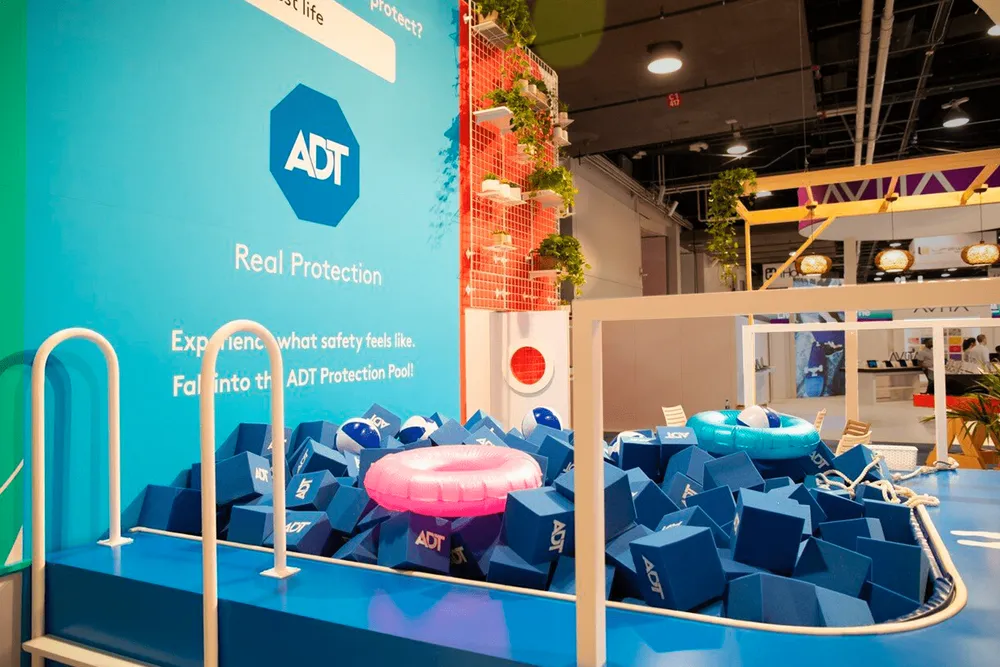
ADT built a trust-fall pit as a working metaphor for its security systems, filmed the falls in slow motion and let attendees share the clip. A prop that makes the brand’s promise physical works harder than any giveaway.
Sustainability, values and long-term partnership
The last three ideas are less about the event and more about the relationship. They convert one-off sponsors into partners, and partners renew.
35. Sponsor the measurable part of sustainability
Rented instead of built stands, a waste report per hall, refill stations (idea 11) and a shuttle instead of taxis (idea 8) are things you can count. Sell the sponsor the measured initiative, not a green label. Since the EU tightened the rules on environmental marketing claims, a sponsorship that comes with numbers is safer for both sides; our summary of the EU green claims rules for event organisers explains which claims still work.
36. Local community project
A one-morning volunteering slot, a donation tied to booked meetings (one euro per meeting held) or a scholarship for local students to attend. It gives the sponsor a story with a number, and it gives your event a place in the city it uses.
37. Multi-year partnership with quarterly check-ins
Event Marketer data cited by Eventeny shows sponsors in ongoing partnerships report 89 per cent higher satisfaction than one-off sponsors. Offer a two-year deal with a quarterly call, an annual audience update and first choice of next year’s assets. Retention is cheaper than acquisition, for you and for them.
How to price and prove each idea
Ideas are only half the package; the other half is the price and the report. Naboo’s 2026 sponsorship guide gives typical UK ranges that map well to mid-sized B2B events: title sponsorship from 15,000 to 50,000 pounds and more, category sponsorship 5,000 to 15,000, booth or exhibition packages 3,000 to 12,000, in-kind deals 2,000 to 8,000 in value and supporting tiers 1,000 to 5,000. Use them as a sanity check, then price by proof: an idea that ends in booked meetings sits in a higher tier than an idea that ends in impressions, whatever it costs you to deliver.
| Tier (Naboo 2026) | Typical range | Ideas that belong here |
|---|---|---|
| Title | 15,000 to 50,000+ GBP | 1, 23, 28, 37 |
| Category | 5,000 to 15,000 GBP | 13, 16, 19, 20, 25 |
| Booth / exhibition | 3,000 to 12,000 GBP | 4, 21, 31, 34 |
| In-kind | 2,000 to 8,000 GBP value | 6, 7, 8, 11 |
| Supporting | 1,000 to 5,000 GBP | 3, 10, 12, 24 |
Whatever the tier, the report is the product. Build it before you sell the idea.
From idea to renewal
Four steps that turn a sponsorship idea into evidence
- Ask for the goal, not the budget Recruitment, pipeline, launch, retention: the goal decides the row in the six-type table.
- Choose the asset for that goal Pipeline goals get meeting assets, launch goals get stage and content, recruitment goals get experience formats.
- Fix the metric in the contract Logins, participants, session rating, opt-ins or meetings held: one number per asset, agreed up front.
- Report within three weeks One page per sponsor, same structure every year, so renewals compare like with like.
If you are turning this into a document, our guide on how to write a sponsorship prospectus covers the ten sections sponsors read, and the event budget template shows where sponsorship revenue and the meeting programme sit in the overall numbers.
3 Tips to integrate your Event and Conference Sponsorship Ideas
Thirty-seven ideas are not a package. Three rules help you turn the list into one.
- Match the idea to the sponsor’s goal, not to their logo. A recruiter wants the first-timers’ hour, a software vendor wants meeting slots, a bank wants the executive dinner. Ask before you propose.
- Give every idea one number. Logins, scans, participants, meetings held. If you cannot name the number, move the idea down a tier or drop it.
- Keep the attendee in charge. Meetings only with opt-in, sessions with content standards, data only aggregated. Sponsors renew where attendees came back.
None of this helps until there is a sponsor on the other side of the table, and finding one runs on its own timeline: our guide to finding sponsors for a B2B event sets out the five qualification criteria and the months in which budgets are actually still open.
Swag is the oldest sponsorship asset of all and usually the weakest, unless the sponsor funds an item attendees actually keep or one they collect after a meeting. How to sell and price those models per kept item is covered in our guide to conference swag that attendees keep.
Frequently Asked Questions
What are some ways to sponsor an event?
Sponsors can fund visibility (stage, signage), infrastructure (wifi, charging, shuttles), experiences (lounges, dinners), content (sessions, streams), data (surveys, audience reports) or meetings (scheduled 1:1s, matchmaking slots). Each type produces a different kind of proof, from impressions to booked meetings.
What are the most common types of event sponsorship?
The six types above cover almost every package: visibility, infrastructure, experience, content, data and meetings. In practice most events sell title, category, booth, in-kind and supporting tiers, and mix several types into each tier.
What do sponsors get in return for sponsoring an event?
In 2026 sponsors expect more than logo placement: qualified contacts, meetings with attendees who match their criteria, audience data and a report they can show internally. Targeted, personalised opportunities rank above volume-based exposure as the top sponsor expectation (Showcare Event Sponsorship Pulse Report 2026).
What is non-booth sponsorship?
Non-booth sponsorship attaches a sponsor to something the event needs anyway, such as wifi, charging stations, shuttles, badges, lounges or the meeting programme, instead of selling exhibition space. It is usually cheaper to deliver, easier to measure and remembered at the moment the attendee benefits.
What is the easiest sponsorship to get?
In-kind and infrastructure sponsorships are usually the easiest first deals, because the sponsor already produces the product or service and the value is obvious to attendees. The easiest sponsorship to renew is the one that came with a report, most often a meeting programme with a documented number of held meetings.
Conclusion
The 2019 version of this list asked how a sponsor could be seen. The 2026 version asks what a sponsor can prove, because that is the question the sponsor’s finance lead will ask before the renewal. Visibility and infrastructure still open the door; experiences fill the room; content and data outlive the event; meetings are the proof that survives budget season.
If you want to see how a meeting programme works as a sponsorship asset, with sponsors as a participant group in the meeting matrix and a report per sponsor at the end, get in touch with Converve. We will be happy to walk you through it with your own event in mind.