The marketing director who sponsored your conference last year has a new question from her finance lead: not “where was our logo?” but “how many of the right people did we actually talk to?” If your sponsorship proposal still opens with banner sizes and lanyard counts, that question is hard to answer, and the renewal gets harder every year.
Event sponsorship is a paid partnership in which a company funds or supplies part of an event in exchange for defined access to the audience: brand placement, stage time, content, data or pre-scheduled meetings. In 2026 sponsors judge that access by the conversations it produces and the report they receive afterwards, not by impressions. That shift changes where you look for sponsors, how you qualify them and what you put in the package.
This guide walks you through the seven steps to find sponsors for a B2B event, from target group to signed contract, with the numbers sponsors now expect, a twelve-month outreach timeline and the report that keeps them coming back. Sponsors buy access to the right conversations. Everything else is packaging.
In short:
- Sponsors choose events by price-to-value ratio and audience seniority, not by reach (IDC 2026).
- Qualify sponsors with five criteria before you write a single email.
- Sell three kinds of package: tiered, à la carte and outcome-based (meetings, data, content).
- Start outreach six to twelve months before the event; many budgets close in Q4.
- Deliver a one-page sponsor report within three weeks. It is your renewal pitch.
Why is event sponsorship important?
For you as the organiser, sponsorship is income that does not depend on ticket sales. For associations it is often the larger share: in a 2026 survey by the membership platform Joinit, 37 per cent of organisers said sponsorship delivers 40 to 60 per cent of their event revenue. If that is your ratio, every sponsor you lose in January is a budget line you cut in March.
Sponsors also add value beyond money. A recognised industry name on your website raises the credibility of a first-year event, and sponsors who promote their session to their own customers bring attendees you could not reach yourself. Well planned, sponsorship is a genuine win-win. Badly planned, it is a discount you give away in exchange for a logo wall.
The balance has moved towards the sponsor’s side of the table. Vendelux, which analyses B2B event budgets, reported in its 2026 trend review that sponsorship portfolios are concentrating: one director of marketing at a mid-market industrial company cut from 25 sponsorships to seven, because a single large sponsorship producing 30 meetings with target accounts beat eight small ones producing four to six each. Sponsors are placing fewer, larger bets. Your event has to justify being one of them.
Event Sponsorship: Corporate Goals
The concentration trend tells you what sponsors want before you ask them. The IDC 2026 Sponsor Survey, which questioned 150 senior B2B marketers in the United States, the United Kingdom, Germany and Singapore in October 2025, found that 84 per cent rank price-to-value ratio as the top criterion for choosing an event partner, 69 per cent look for a senior audience with budget influence, and 91 per cent call independent, credible content critical to an event’s success. Reach did not make the top three.
What sponsors look for
How senior marketers choose events to sponsor
Companies usually sponsor B2B events for a mix of these reasons:
- Pipeline: meetings and qualified leads with buyers they cannot reach through advertising.
- Positioning: a stage slot or a sponsored session that establishes them as the expert in a topic.
- Account access: face time with existing customers who attend, which is often half the value of a sponsorship.
- Recruitment and employer brand: visibility with the talent pool of an industry.
- Corporate responsibility: support for causes or communities that matter to their staff and customers.
Ask each prospect which of these is the goal this year. The answer decides which package you offer and which number you report afterwards.
Event-Sponsorship: How to find the right sponsors?
Which sponsors you contact depends on the type of event and your target group. Once you have identified the right companies, you have to reach them at the right moment with an offer that answers their goal. Then you close with a contract that both sides can live with. The seven steps below follow that order. Take them in sequence; skipping the first two is the most common reason outreach fails.
1. Define your target group
Most companies sponsor an event because the audience matches their own target group closely, or because the event attracts media attention. The first is far more common in B2B, so your first job is to describe your attendees with the precision a sponsor’s marketing director needs to convince her finance lead.
A narrow audience is an advantage here. A conference for 400 procurement heads in the automotive supply chain is a better sponsorship than a general business fair with 4,000 visitors, because every attendee is a potential buyer for the right sponsor. Less wastage, easier targeting, higher prices per contact.
Build an audience profile with the following data:
- Roles and seniority: share of directors, heads of department and C-level, because 69 per cent of sponsors ask for exactly that (IDC 2026).
- Industries and company sizes: the sectors and revenue bands your attendees come from.
- Buying responsibility: what your attendees purchase or influence, and the typical budget size.
- Past behaviour: meeting requests, session attendance and app activity from the last edition, if you have them.
Example 1: An association running its annual conference for hospital IT managers can tell a sponsor exactly how many attendees decide on procurement of clinical software. That single number is worth more than total attendance.
Example 2: A startup conference with 800 founders and 120 investors can offer a fintech sponsor the 90 founders in payments and lending as a segment, rather than the whole hall.
If you cannot describe your audience at this level, fix that before you approach anyone. It is the raw material of every later step.
2. Create sponsorship packages
By developing sponsorship packages, you make life easier for yourself and for the sponsor. In these packages you define in advance how and where sponsors can present themselves, what they receive, and what it costs. There are three approaches, and most B2B events in 2026 use a combination.
Tiered sponsorship: the classic model. Different packages at different prices, often called Platinum, Gold, Silver and Bronze. Simple to sell, simple to compare.
À la carte sponsorship: a menu of individual assets that sponsors combine themselves. Suits sponsors who know exactly what they want and events with many small partners.
Outcome-based sponsorship: packages built around a result rather than a placement, for example a fixed number of pre-scheduled meetings with qualified buyers, a sponsored research report or access to an audience segment. This is the model that has grown fastest, because it produces the numbers the sponsor’s finance lead is asking for.
Tiered sponsorship
Step 1: Define the levels
Four levels are usual. The names matter less than the logic: each level should add one clearly more valuable asset, not just a bigger logo.
Step 2: Define the number of sponsors per level
Start with the total amount you want to raise, then divide it across the levels. Offer the top level to one or two sponsors only. Exclusivity is the strongest argument you have at the top of the price list. If only the Platinum sponsor gets the keynote introduction, that slot becomes worth negotiating for.
Step 3: Assign assets to the levels
Sort your assets by value and match them to the levels. A sponsor should be able to read the table and see at a glance which level answers her goal. Below is a table for a two-day B2B conference with 600 attendees; the numbers are a starting point, not a rule.
| Sponsor benefit | Platinum | Gold | Silver | Bronze |
|---|---|---|---|---|
| Sponsor profile (website, app, social media, logo and description) | x | x | x | x |
| Logo in all attendee newsletters | x | x | x | |
| Sponsored session or panel seat (30 minutes) | x | x | ||
| Keynote introduction (60 seconds on stage) | x | |||
| Pre-scheduled 1:1 meetings with qualified attendees | 15 | 8 | 3 | |
| Push notification and in-app survey to all attendees | x | x | ||
| Access to the opted-in attendee list (name, company, role) | x | x | ||
| Sponsored content in the post-event report | x | |||
| Attendee tickets | 10 | 6 | 3 | 2 |
| Price | 40,000 € | 15,000 € | 6,000 € | 2,500 € |
Note the meeting row. Fifteen pre-scheduled meetings with the right buyers are the reason a Platinum sponsor can defend 40,000 euros internally. The logo rows are what she gets on top. If you would rather build your own tiers than copy this table, our guide to crafting a sponsorship package works through the pricing logic asset by asset.
À-la-carte sponsorship
With this model the sponsor assembles an individual package, so you need a full list of assets with a price for each. Split the list into “before the event”, “during the event” and “after the event”. That structure also reminds sponsors that their visibility does not have to stop when the hall closes.
Before the event
Visibility in the run-up: the registration page, the confirmation email, the agenda emails and your social channels. Examples:
- The sponsor’s logo and link on the registration page and in every confirmation email.
- A sponsored agenda item promoted in your email series.
- A sponsor spotlight post on your LinkedIn event page.
- Sponsor branding on the pre-event meeting request emails.
During the event
Brand presence and interaction on site or in the virtual venue. Examples:
- A sponsored lounge or meeting area where the scheduled 1:1 meetings take place.
- A sponsored session, roundtable or workshop with the sponsor’s expert.
- Wifi, charging stations, badges or the shuttle, the infrastructure attendees are grateful for.
- Live polls in the event app that carry the sponsor’s question.
After the event
On-demand content and community presence. Examples:
- A mention in the first thank-you email after the event.
- The sponsor’s session in the on-demand library, with a link to their contact form.
- A sponsored question in the post-event survey.
- A branded follow-up meeting round four weeks later for attendees who did not get a slot on site.
If you want to see what individual assets are worth, our list of 37 creative sponsorship ideas sorts them by what the sponsor can prove afterwards.
Would you like to see how an event platform turns meetings, sessions and app interactions into sponsor reports? We would be happy to show you in a personal demo.
3. How to identify potential sponsors
A package without a matching sponsor is a brochure. The next step is a list of companies that have a reason to buy it, and the reason is always the same: your audience is their target group. Research the following points for each candidate.
Start with companies in your industry niche. Suppliers, service providers and technology vendors that sell to your attendees are the natural first circle. They already spend money to reach exactly these people.
Look for companies that share similar values. If a company’s positioning matches the image of your event, the partnership is easier to explain internally on both sides. A sustainability-focused conference should look at sponsors that publish sustainability reports, not just sponsors with a green logo.
Find out whether the company has sponsored similar events. The best predictor of a sponsorship is a previous sponsorship. A company that sponsored your competitor’s conference last year has a budget line, a decision-maker and a reason to compare.
Find out which brands your audience already uses. Ask in your registration form or post-event survey which tools and suppliers your attendees work with. Those companies have customers in your hall, and customer contact is often the half of the sponsorship value that sponsors underestimate.
Then score every candidate against five criteria before you spend outreach time on them:
- Audience overlap: at least a third of your attendees are in the company’s target group.
- Live budget: the company has sponsored or exhibited in the last 18 months.
- Reachable decision-maker: you can identify a head of marketing, partnerships or field marketing on LinkedIn.
- Clear goal: you can name the outcome the company would want from your event (pipeline, positioning, account access).
- Exclusivity available: you have not yet signed a direct competitor at the same level.
Three out of five is your outreach list. Five out of five gets a phone call, not an email.
4. Where to find potential sponsors?
Finding sponsors has become easier with digital tools, but the most productive sources are still the ones closest to your event.
Similar events
Reverse the process: look at events in your sector and note who sponsored them, at which level, and whether they came back the following year. A sponsor who renewed twice at a comparable event is a warm lead, because you can show them the same audience with a different date.
Your own exhibitors, speakers and attendees
Last year’s exhibitors are this year’s sponsors if you can show them what a sponsorship adds on top of the stand. Speakers’ companies often have partnership budgets. Attendees who bring three colleagues are working for companies with an interest in your topic.
Sponsorship platforms and directories
Marketplaces such as SponsorPitch, SponsorMyEvent or Sponseasy list companies that actively look for events, and some include a database and CRM (customer relationship management) tools. For B2B conferences they are a supplement rather than the main source, because the buyers with the largest budgets rarely browse marketplaces. Association member directories and trade press sponsor lists are usually more productive.
LinkedIn and targeted campaigns
Use LinkedIn to find the partnerships or field marketing lead at each company on your list, and to see which of your speakers or board members know them. A warm introduction improves reply rates more than any subject line. A small paid campaign that targets marketing roles in your sector with a “sponsorship prospectus” download can add candidates you had not thought of, but treat it as a top-up, not the strategy.
5. Create a sponsorship pitch
Create a short, specific pitch with an offer that answers the sponsor’s goal. The document you send is usually called a sponsorship prospectus, and what belongs in it, and what sponsors skip, is the subject of our guide on how to write a sponsorship prospectus. The pitch itself, whether as a PDF or a short deck, should cover these points:
- Theme and format of the event: what the event is about, who speaks, and why the audience attends. Two sentences, not two pages.
- Audience profile: the roles, seniority, industries and buying responsibility from step 1, with real numbers from the last edition.
- The sponsor’s goal, named explicitly: “You are launching in the DACH market; 140 of our attendees run purchasing in DACH manufacturing companies.”
- The offer: the package that fits the goal, with the meeting, data or content asset in first position and the visibility assets after it.
- Proof from previous editions: meetings held, session attendance, survey results, quotes from sponsors who renewed.
- Measurement: which number you will report and when.
- Price and next step: the price, what is negotiable, and a proposed call date.
Extras such as free tickets, VIP access, a sponsor dinner or a reserved meeting room raise the perceived value at low cost. Put them at the end of the offer, not at the start.
Four tips for the pitch itself:
- Personalise the first paragraph. Reference the sponsor’s recent launch, hire or campaign; generic proposals get generic silence.
- Keep the whole document under ten pages. Sponsors read the audience page and the price page first.
- Have one colleague proofread it and one colleague who knows the sponsor sanity-check it.
- Say how the process continues and when you will follow up.
6. Contact potential sponsors
You have the list and the pitch. Now timing decides more than wording. Most companies plan sponsorship spend annually or quarterly, and many finalise marketing budgets in the fourth quarter. Cvent’s 2026 guidance for organisers puts the minimum lead time at six months before the event, and earlier for large packages with custom activations. If you approach a sponsor three months out, the budget is usually already committed elsewhere.
Timeline
Sponsor outreach from twelve months out to three weeks after
- T-12 months Audience profile and package design Update the attendee data from the last edition and set levels, assets and prices.
- T-9 months Prospectus and target list Finish the prospectus, score candidates with the five criteria, map warm introductions.
- T-8 to T-6 months First outreach Personal emails and calls while sponsors still have unallocated budget, often September to December.
- T-5 to T-4 months Calls, negotiation, contracts Adjust packages to the sponsor goal, agree the metric, sign.
- T-3 to T-1 months Activation planning Brief the sponsor on sessions, meeting matching and app assets; open meeting requests to attendees.
- Event Deliver and track Meetings held, session attendance, app interactions, opt-ins.
- T+3 weeks Report and renewal One-page report per sponsor, then the renewal conversation while results are fresh.
Once you know the timing, find the right person. Sponsorship decisions usually sit with the head of marketing, field marketing or partnerships; at larger companies a demand generation lead owns the budget for events. The company website and LinkedIn will get you the name, and a speaker, board member or existing sponsor will often get you the introduction.
Send the pitch with a short cover email that names the sponsor’s goal in the first two lines and the offer in the next two. Mention where the contact came from. Attach the prospectus, and propose a date for a call.
You will rarely hear back immediately. After seven to ten days, follow up briefly with one new piece of information, for example the latest registration number or a newly confirmed speaker. Two follow-ups are normal, four are a nuisance. First-year events need more patience, because sponsors have no proof yet; offer them a smaller package with a renewal option instead of a discount.
7. Conclude sponsorship contracts
If the sponsor is interested, put the agreement in a written contract. The contract documents the tax treatment of the sponsorship for both parties and prevents disputes later about what exactly was promised. According to the law firm Winheller, which advises associations and non-profits, a sponsorship contract should specify at least the following:
- Obligations to perform: which services the organiser delivers (sessions, meetings, placements, data) and which cash or in-kind contribution the sponsor owes, including quantities, dates and due dates.
- Liability rules: who bears the cost if the event is cancelled or postponed, which contractual penalties apply if a party fails to deliver, and who insures accidents on site.
- Duration and renewal: there are no statutory rules for sponsorship contracts, so the parties define the term, the option to renew and the notice period themselves.
Add two clauses that did not matter as much in 2023: how attendee data is handed over (only opted-in contacts, in line with the GDPR (General Data Protection Regulation)), and which metric you will report. A contract that names the metric is the beginning of the report.
Law firms will draft or check a contract from a legal and tax perspective. Templates from associations and legal template services are a starting point, but only legal advice can confirm they fit your case.
Implement sponsorship activities
Whether in-person, virtual or hybrid, sponsors are key to a successful event, so put your partners in the spotlight. But “spotlight” has changed meaning. In 2026 the most valuable activation is not the largest banner but the moment the sponsor’s expert sits opposite the buyer she wanted to meet.
How to present sponsors during the event
- Make the sponsor useful: wifi, charging, the coffee bar and the meeting lounge are the moments attendees are grateful for. Gratitude beats interruption.
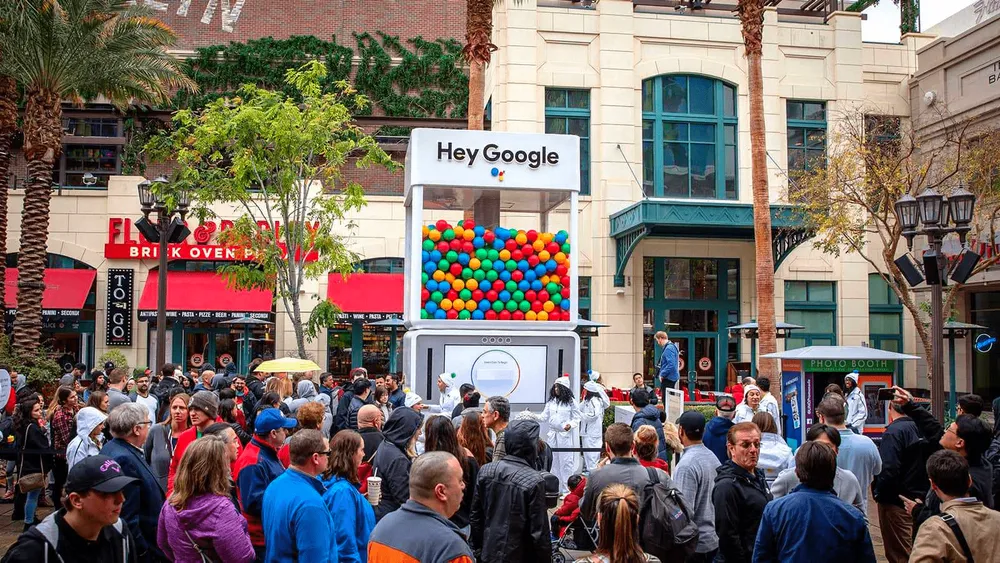
- Make the sponsor big: one oversized product or one interactive installation creates more photos than a wall of roll-ups.
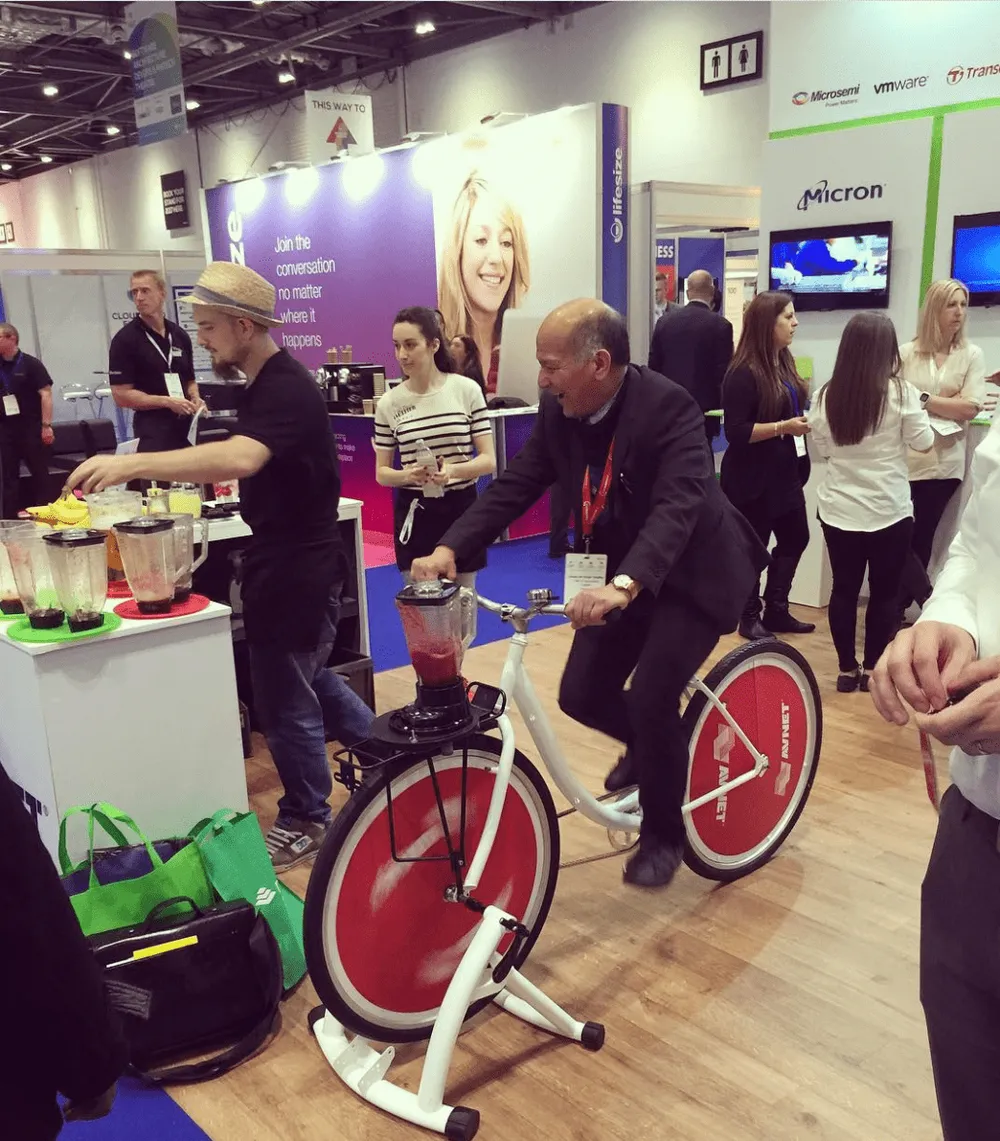
- Connect the sponsor with a break: a smoothie bike, a coffee cart or a quiet zone gives attendees a reason to stop, and the sponsor a reason to talk.
- Give the sponsor a question, not a slogan: live polls, a roundtable topic or a survey question in the app put the sponsor into the content instead of next to it.
How to integrate sponsors into the event
- Your sponsor as speaker: give the main sponsor a session or a panel seat, and brief them hard: a customer story, not a product tour.
- Scheduled meetings: let attendees request meetings with the sponsor’s team before the event, and put the confirmed slots into both calendars. This is the asset sponsors rate highest and organisers sell least.
- Video and livestream: short sponsor clips between sessions and a sponsor logo in the stream reach the online audience at low cost.
- On-demand content: the sponsor’s session in your media library keeps working for months.
Solution: In Converve, sponsors are set up as exhibitors or partners with their own profile, and attendees request meetings with them the same way they request meetings with each other. The meeting matrix schedules the slots against availability and room capacity, and after the event the sponsor report shows meetings requested, confirmed and held. That is the number the sponsor’s marketing director takes to her finance lead. A booked slot only counts once someone turns up, which is why the no-show rate belongs in the same report.
How to thank sponsors after the event
- Report within three weeks: one page per sponsor with the agreed metric, the audience they reached and two or three quotes from attendees. Then propose the renewal date.
- Sponsor dinner or debrief call: thank them in person and ask what they would change.
- First email after the event: thank the attendees and mention the main sponsors by name.
- Community presence: if you run a year-round community for attendees, keep the sponsor’s content and profile in it; our guide to hosting a virtual community platform shows how.
The report is where most events lose their sponsors. Bizzabo’s State of Events 2026 benchmark found that the share of organisers who struggle to prove event ROI (return on investment) fell from 70 per cent in 2025 to 40 per cent in 2026. Progress, but still four in ten organisers cannot show their sponsors what they got. And an industry analysis by Ei Advisory, citing Demand Gen Report figures from 2025, puts the follow-up problem in one number: 80 per cent of trade show leads never receive any follow-up at all. If your sponsor’s leads sit in a spreadsheet for three weeks, the sponsorship failed after the event, not during it. Getting contacts off the show floor and into the sponsor’s system the same day is exactly what lead retrieval is for.
Associations sell something different from reach: documented access to a closed, qualified membership, under compliance rules that commercial organisers never meet. That changes both the package and the pricing logic, as we set out in how to attract sponsors for association events.
Frequently asked questions
How do you get sponsors for an event?
Define your audience precisely, build packages that match what sponsors want to achieve (pipeline, positioning, account access), shortlist companies that already sell to your attendees, and contact the right person six to twelve months before the event with a personalised pitch. Then deliver a report with the agreed metric within three weeks, because the report is the pitch for the following year.
How do I find corporate sponsors for a B2B conference?
Start with companies that sponsored comparable events, your own exhibitors and speakers’ companies, and suppliers your attendees already use. Score each candidate on audience overlap, live budget, reachable decision-maker, clear goal and available exclusivity. Sponsorship marketplaces and LinkedIn campaigns add candidates but rarely bring the largest budgets.
What do sponsors get in return for sponsoring an event?
Depending on the package: brand visibility before, during and after the event, a stage or session slot, access to opted-in attendee data, and increasingly a fixed number of pre-scheduled meetings with qualified attendees. According to the IDC 2026 Sponsor Survey, 84 per cent of senior marketers judge a sponsorship first by its price-to-value ratio.
How much should a sponsor pay for an event?
Prices follow audience quality and exclusivity, not attendance. At B2B conferences with 500 to 1,000 attendees, tiered packages typically run from around 2,500 euros for an entry level to 40,000 euros and more for a single Platinum sponsor with a keynote slot and a meeting guarantee. Association prospectuses in 2026 show similar ranges, with keynote, app or lunch sponsorships between 15,000 and 30,000 US dollars.
When should I approach sponsors for an event?
Six months before the event is the minimum; nine to twelve months is better for large packages. Many companies finalise marketing budgets in the fourth quarter, so outreach between September and December often lands while there is still money to allocate.
How do I attract sponsors for an association event?
Associations have an asset most conferences lack: a defined membership. Offer sponsors member data they cannot buy elsewhere (roles, sectors, buying responsibility), year-round visibility through member communications, and meetings with member decision-makers during the annual conference. Sustaining or annual sponsorships that bundle several events reduce your sales effort and give the sponsor a predictable line in their budget.
Conclusion
Finding sponsors is part of the routine of almost every B2B event, and the routine has changed. Sponsors are placing fewer, larger bets, and they place them on events that can show them the right people and prove the conversations afterwards. Visibility is still in the package; it is no longer the reason to buy it.
The first and most important step is the audience profile, because it answers the only question the sponsor’s marketing director has to answer internally: are these our buyers? Packages turn that profile into an offer; the outcome-based assets, above all pre-scheduled meetings, are what justify the top price. Timing decides whether your pitch reaches a budget or an empty account, so start early and follow up with substance.
With this guide you know exactly what to look out for, from the five qualification criteria to the contract clause that names the metric. If you want to see how meetings, sessions and app interactions turn into a sponsor report your partners can forward to their finance lead, get in touch with Converve.