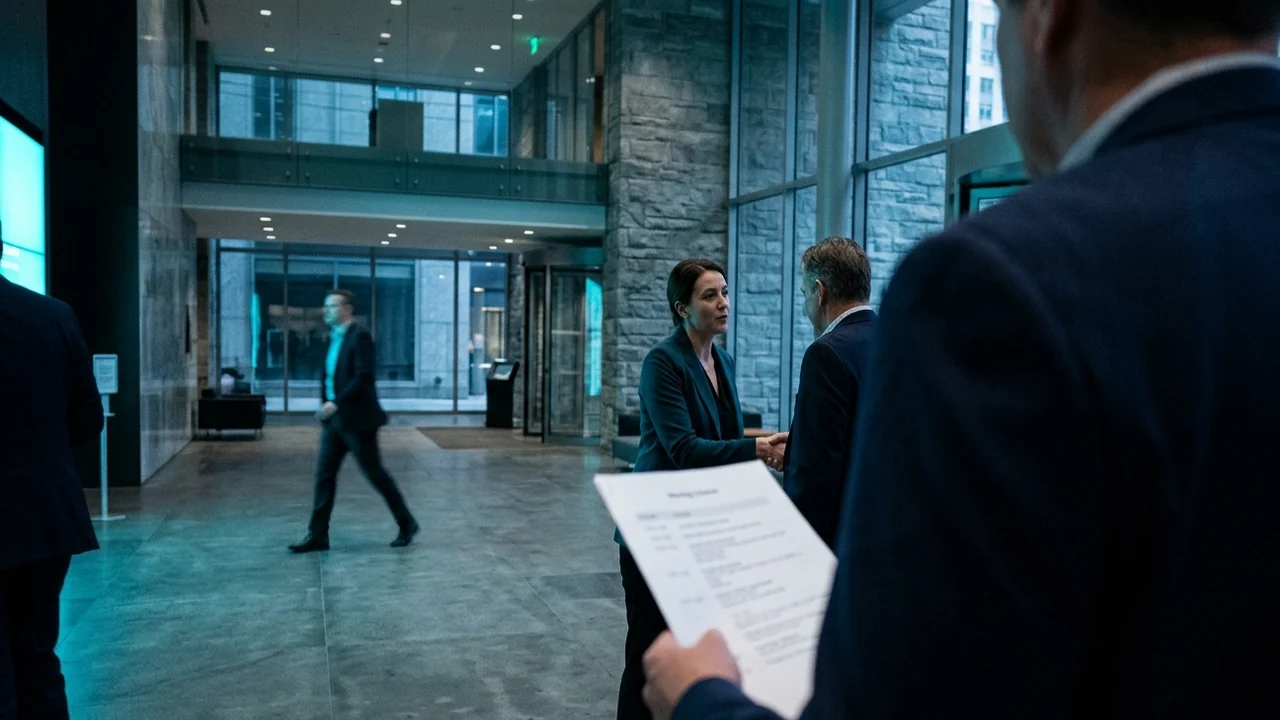
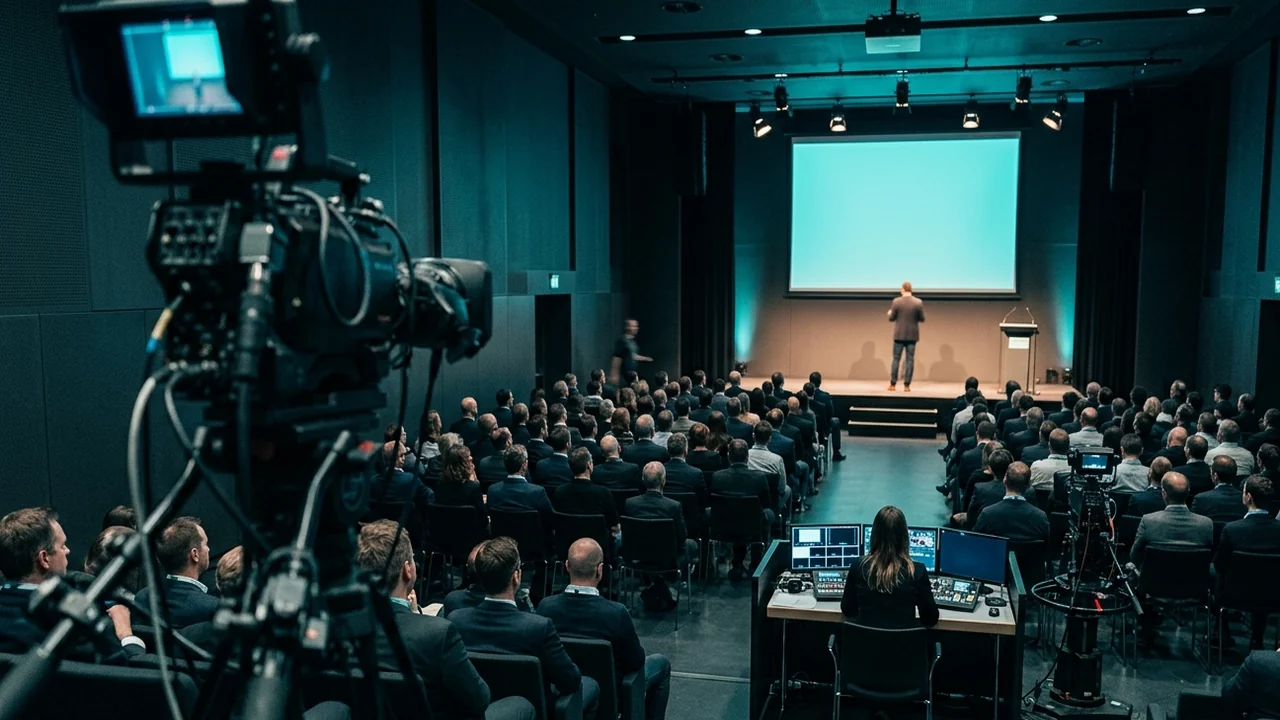
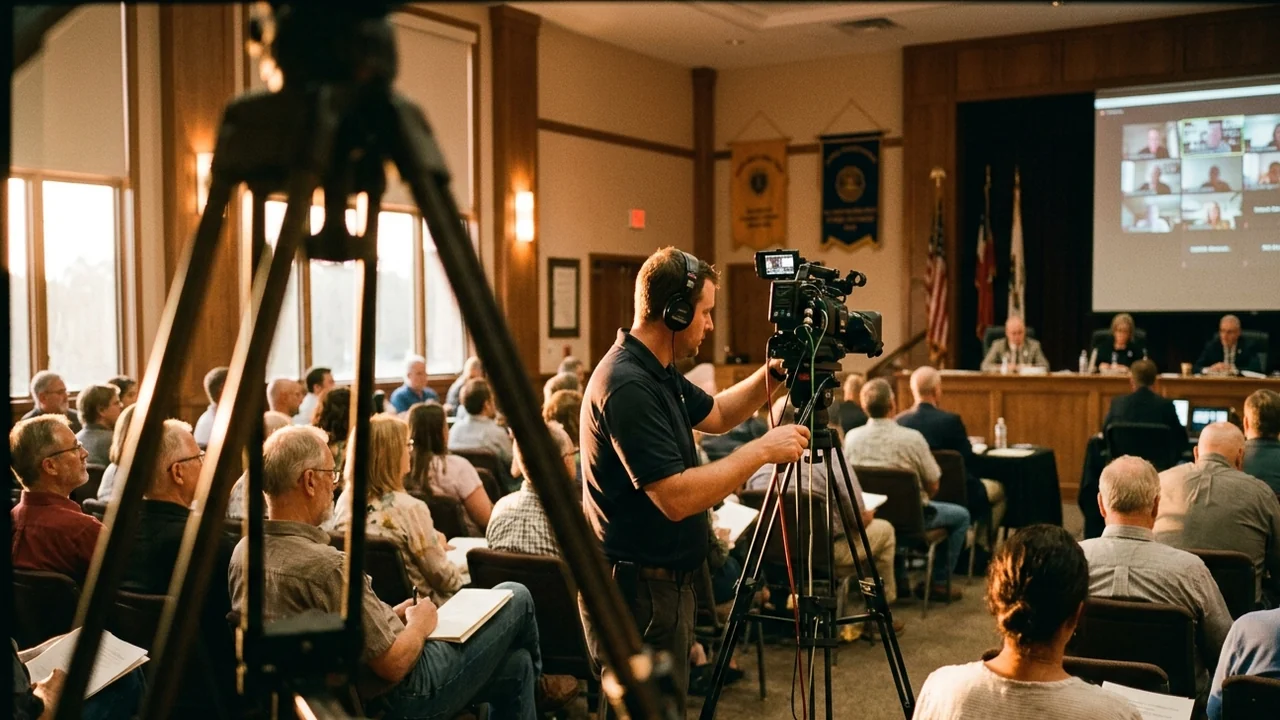
A tourism board flies 120 buyers to its trade show, pays for hotels and transfers, and fills every diary with pre-scheduled appointments. On the last afternoon the programme manager walks the hall and counts: half the meeting tables are empty, exhibitors are on their phones, and two of the “buyers” turn out to be junior staff who came for the city. Her director will ask one question on Monday: what did the hospitality budget bring back?
Nothing went wrong on site. The programme lost months earlier, in decisions that were never written down. That is the pattern behind almost every underperforming hosted buyer programme we have seen since we published the first version of this article in 2016. The format itself is stronger than ever: IMEX America 2025 alone facilitated 92,000 individual and group appointments for 4,729 hosted buyers and 1,416 buyer attendees, and a quarter of those buyers reported budgets above 10 million US dollars (Exhibitor Online, March 2026). Shows in sectors far from MICE (meetings, incentives, conferences and exhibitions) are adopting it, from pet retail to travel technology. The pitfalls have not changed as much as the scale. They have just become more expensive.
A hosted buyer programme pitfall is a design or execution error that turns funded, pre-scheduled buyer-exhibitor meetings into low-value appointments: buyers without budget authority, overloaded diaries, uncontrolled exhibitor outreach, exhibitors tied up while their best prospects walk past, underestimated logistics, virtual formats run like in-person ones, and hospitality that a buyer’s compliance department forces them to decline. Below are the seven that still show up in 2026, each with its cause, its symptom and the fix. If you need the definition and cost structure of the format first, start with what a hosted buyer programme is and come back here.
The seven pitfalls at a glance
- Buyers who qualify on paper but not in practice
- Diaries that are full instead of useful
- Exhibitor outreach that turns into spam
- Exhibitors tied up at the table while their best visitors walk past
- Organisational effort that was never budgeted
- Hybrid and virtual programmes run like in-person ones
- Compliance treated as an afterthought
Origins in meeting and events industry
Ray Bloom, founder of the IMEX Group, is generally credited with inventing the hosted buyer concept for the MICE trade shows of the late 1980s and early 1990s. The logic was simple and still holds: an organiser invites qualified buyers, covers flights and hotels, and in return the buyer commits to a set number of pre-scheduled appointments with exhibitors. Exhibitors know in advance who they will meet and can calculate their investment. IMEX, IBTM World and The Meetings Show still run on this model, and IMEX Frankfurt reports that its hosted buyers book 16 or more meetings per show against a commitment of six to eight per day (IMEX Frankfurt, 2026).
What has changed is the spread. In 2026 the pet and aquatics show PATS launched its first hosted buyer programme at the NEC Birmingham after a 70 per cent rise in visitors the year before, asking buyers for five meetings per day booked four weeks ahead (ChannelLife UK, April 2026). Travel Tech Asia in Singapore added a programme of around 100 technology buyers from hotels, agencies and destination management companies (ITB Asia, July 2026). ZUCHEX in Istanbul, part of Informa Markets, offers two nights of accommodation and lounge access to approved home and kitchenware buyers. The format is now a standard tool wherever exhibitors demand proof that their stand will produce conversations.
The model has also loosened at the edges. IBTM World introduced a paid Visitor Buyer tier in 2025 at 399 euros early and 499 euros later, with free choice of meetings and no minimum, alongside its classic hosted programme (Skift Meetings, July 2025). That spectrum from fully hosted to visitor buyer to open registration is where several of the pitfalls below now hide, because the rules that worked for one tier are quietly applied to another. We compare the tiers in hosted buyer programme vs open registration; this article is about what goes wrong inside the hosted tier itself.
The format in 2026
What leading shows deliver and demand from hosted buyers
1. How do visitors qualify for a hosted buyer program?
The tourism board’s two junior “buyers” did not sneak in. They were admitted by a form that asked for a job title and a company name and nothing else. Qualification is the pitfall every vendor guide now lists first, and for good reason: Swapcard’s 2026 guide names under-qualifying buyers as the mistake that “floods exhibitor calendars with dead meetings”, and vFairs adds the opposite failure, criteria so strict that the programme cannot be filled. Both are symptoms of the same missing piece. Nobody decided, in writing, what a buyer has to bring.
The shows that get this right publish the bar. Business Travel Show America admits fully hosted buyers only from companies with an annual travel and entertainment spend of at least five million US dollars, and only if the applicant sets policy, manages spend or selects vendors (Business Travel Show America, 2026). PATS asks for evidence that the retailer is actively sourcing new products at the show. THAIFEX HOREC Asia screens for purchasing plans, budget authority and fit between exhibitor products and the buyer’s category. The criteria differ by sector. The principle does not: authority, budget and a purchasing horizon of six to twelve months, verified rather than declared.
Verification is the part most programmes skip. A phone call, a reference from an exhibitor who has sold to the buyer before, or an intermediary network like the one IMEX uses through partner agencies, costs a few hours per buyer. A flight, three hotel nights and a lounge cost far more, and a wrongly admitted buyer also takes a diary slot that a qualified one would have filled. Where the decision is unclear, give it to a small review board rather than a single inbox. We go step by step through the scoring in how to qualify hosted buyers.
Solution: a matchmaking platform with staged registration lets you collect structured criteria (budget band, decision role, target markets, purchasing timeline) as mandatory fields and release a buyer into the meeting pool only after a reviewer approves the profile. In Converve, gatekeepers approve per participant group, so an unverified application never appears in an exhibitor’s search results.
2. What about scheduling?
Once the right buyers are in, the second pitfall is the diary itself. IMEX asks for six to eight meetings a day and Business Travel Show America for five 15-minute slots a day, and both numbers are the result of years of correction downwards. A full diary looks like proof of value to a programme manager under pressure from her director. To the buyer on the receiving end, the ninth 20-minute meeting of day two is the one she cancels, and to the exhibitor it is the one where “the appointments are processed within 5 minutes due to mutual lack of interest”, as Michael Part, Sales Manager at Austria Center Vienna, described the worst IBTM diaries to the trade magazine tw, quoted in the first version of this article. That quote is a decade old. The mechanics behind it have not moved.
Three rules keep a diary useful rather than merely full. First, the meeting count follows the buyer profile: senior corporate planners at the lower end, high-velocity sourcing buyers at the upper end. Second, both sides may decline. Forced appointments were the original complaint against hosted buyer programmes and remain the fastest way to lose a buyer for next year; a request the exhibitor has accepted and the buyer has confirmed is a different meeting from one the system assigned. Third, the timetable respects the rest of the show: education sessions, the lounge, and the walk between halls. A meeting scheduled in the middle of the keynote the buyer travelled for will not happen.
There is also a fourth rule that vFairs is right to highlight: lock the diary early enough that people can read it. A schedule released the evening before arrival produces confusion on site and a quiet loss of trust in the format. Four weeks before the show, the window PATS uses for buyer bookings, is a realistic release point for the first version, with a defined change window until the final week. How many meetings per buyer per day is realistic for your profile, and how long each slot should be, we work out in how many meetings each hosted buyer should get.
3. How do I avoid spam as an event organizer?
A well-built diary can still be undone in the weeks before the show. The classic mistake, and it still happens at MICE events every year, is to hand the hosted buyer list to exhibitors as a spreadsheet. Within days each buyer has forty near-identical emails, a few phone calls, and a LinkedIn inbox full of “looking forward to meeting you”. Senior decision makers cite exactly this experience when they decline the next invitation. The programme has spent its hospitality budget on making its own buyers unreachable.
In 2026 this is no longer only an etiquette problem. Buyer contact details are personal data. Passing them to dozens of third parties without a legal basis, a documented purpose and a way to object is a data protection breach for a European organiser under the General Data Protection Regulation (GDPR), and increasingly a contractual one elsewhere. The safer design is also the more effective one: exhibitors see buyer profiles inside the platform, send meeting requests through it, and receive contact details only for confirmed meetings. What exhibitors may see, and what a platform must document, is on our GDPR checklist for event software.
Solution: bundle exhibitor news into one organiser-sent hosted buyer newsletter in the run-up, and cap request volume per exhibitor and per buyer in the platform. A limit of, say, three open requests per exhibitor to any buyer keeps the strongest stands from monopolising the diaries and keeps buyers reading.
4. Exhibitors tied up at the table while their best visitors walk past
The mirror image of the spam problem sits on the exhibitor side. A stand that has sold its sales director into eight hosted buyer meetings a day has no sales director for the regional buyer who turns up unannounced with a signed budget. The hosted buyer diary is the commercial backbone of a tourism trade show, not the whole show, and exhibitors who forget that come home with full calendars and thin pipelines. Michael Part’s quote above ended with exactly this complaint: the heavyweights “have to be found in the aisles or arrange something privately in advance”.
The organiser cannot staff the exhibitor’s stand, but the organiser designs the conditions. Hosted buyer meetings held in a dedicated matchmaking area with numbered tables, rather than at the stand, free the stand team and keep walking distances short. Meeting blocks with deliberate gaps, for example two hours of appointments in the morning and an open hall in the afternoon, give exhibitors time for the visitors nobody scheduled. And a briefing that tells exhibitors, in numbers, how many of their meetings are with buyers above a given budget band changes how they staff the table. An exhibitor who knows that three of eight meetings are with buyers holding seven-figure budgets sends the right person to those three.
5. Organisational effort that was never budgeted
Everything above is the visible programme. Underneath it is a workload that first-time organisers regularly underestimate by half. The director who approved the hospitality budget also approved, without knowing it, three to four months of near full-time work: programme design (fully hosted or semi-hosted, which costs are covered, what happens when a buyer misses meetings), watertight application terms, application review, flight and hotel booking, visa letters, transfers, a hosted buyer lounge, evening events, and the appointment system itself. The Meetings Show’s terms and conditions run to more than a dozen clauses on cancellation alone, including one that treats more than two missed pre-scheduled appointments in a single day as a cancellation with a fee (The Meetings Show, 2026). Somebody has to write, communicate and enforce that.
The StepFlow below maps where programmes typically tip over. Notice that four of the seven pitfalls sit before the diary is even built.
Where programmes tip over
From application form to meeting table: the seven pitfalls along the timeline
- T-6 months Programme design Pitfall 5 and 7: effort and compliance are not budgeted. Decide the hosting tier, the meeting minimum, the no-show clause and whether corporate buyers may accept hospitality at all.
- T-5 to T-3 Application and qualification Pitfall 1: the form asks for a title, not for budget authority. Verify rather than declare, and route doubtful cases to a review board.
- T-3 to T-1 Matching and requests Pitfall 3: buyer lists leave the platform. Keep requests inside the system, cap volume, and send one bundled newsletter instead of forty emails.
- T-4 weeks Diary release Pitfall 2: diaries are full instead of useful. Release early, allow declines on both sides, respect sessions and walking time.
- Event days On site Pitfall 4 and 6: exhibitors are locked at the table, remote buyers are left with a link. Staff the matchmaking area, refill freed slots, host the video meetings like the physical ones.
- T+2 weeks Follow-up and report The report your director reads: held meetings, completion rate, exhibitor rating, rebooking intent. Without it, next year’s budget conversation starts from zero.
Pricing has to carry all of it. Exhibitor packages for the hosted buyer programme should be costed from the full list above plus margin, not from the hospitality line alone. Programmes that price only the flights and hotels discover the lounge, the transfers and the staff in the final invoice, and the director discovers them in the post-show review. The full seven-step build, including the 90-day timeline, is in how to run a hosted buyer programme.
6. Hybrid and virtual programmes run like in-person ones
This pitfall did not exist when the first version of this article was written, and most guides still treat it as a footnote: the same matching engine, just with video links. The organisers who have run hybrid hosted buyer programmes since 2020 know that the hosting logic changes completely once the hospitality is gone. A buyer who is flown in, fed and housed has accepted an obligation. A buyer who joins from her office has accepted a calendar invite, and calendar invites lose to whatever lands on her desk that morning. Virtual meeting no-show rates of 43 to 60 per cent, against 25 to 40 per cent for in-person meetings (InviteDesk, October 2025), are the result, and a programme that applies its in-person minimum of six meetings a day to remote buyers will see the afternoon slots evaporate.
Three adjustments make the remote tier work. Qualify remote buyers at least as strictly as hosted ones, because the cost of a wrong admission is now the exhibitor’s time rather than your travel budget, and exhibitors notice. Replace the missing hospitality with a different obligation: a shorter minimum, a confirmed slot 48 hours before each meeting, and a visible record of completed meetings that the buyer knows exhibitors can see. And host the video meetings the way you host the physical ones: a staffed virtual meeting desk that handles late joiners and reschedules, time-zone-aware scheduling that never places a Singapore buyer at three in the morning, and a fallback slot for every failed connection. The mechanics of tracking held versus booked meetings across both tiers are covered in our guide to event meeting no-show rates.
Solution: run both tiers on one platform and one diary, so an exhibitor sees a single schedule with a location field that reads “Table 14” or “Video room”, and so your completion statistics are comparable. Converve’s hosted buyer solution schedules in-person and video meetings in the same matrix, which is also what keeps the reporting honest.
7. Compliance treated as an afterthought
The last pitfall is the one that quietly removes your most valuable buyers before they ever apply. Corporate meeting planners, procurement staff and public-sector buyers increasingly work under gift and hospitality policies that forbid accepting paid travel from a party they may later contract with. A programme that offers flights and hotels as an undifferentiated package gives those buyers one option: decline. Ten years ago we noted that corporate planners were being excluded from MICE programmes by their own compliance rules. In 2026 the rules are stricter and the buyers more senior.
Transparency International’s anti-bribery guidance offers a usable test for whether hospitality is defensible: it must be bona fide (for a genuine business purpose), create no obligation on the recipient, exert no undue influence on a decision, be made openly and documented, and be legal in every jurisdiction involved. A hosted buyer programme passes most of those tests by design, because the obligation is to attend meetings rather than to buy. It fails the “made openly” test when the invitation, the value of the hospitality and the meeting commitment are not written down in a form the buyer can forward to her compliance officer.
The fix is administrative, not structural. Publish the value of the package, offer a self-funded or semi-hosted tier for buyers who may not accept travel, provide a one-page letter that describes the obligations for the buyer’s employer, and keep the programme’s terms identical for every buyer in a tier. For European organisers the data protection dimension belongs in the same document: what is collected for visa and travel purposes, who processes it, and when it is deleted. Compliance-ready programmes do not lose buyers to their legal departments. They gain the ones that other shows cannot reach.
Which software do hosted buyer programmes use?
Several of the fixes above assume a platform: staged registration with approval, request caps, one diary for both tiers, completion reporting. Spreadsheets and email cannot do this above roughly 30 buyers, which is why “relying on spreadsheets” appears on every vendor’s mistake list, including ours. If your question is which platform, rather than which rules, we compare the current options, including Converve, in our hosted buyer software comparison. The rules come first, though. A platform enforces decisions. It does not make them.
Frequently Asked Questions
What is a hosted buyer event?
A hosted buyer event is a trade show or meeting programme in which the organiser pre-qualifies senior buyers, covers their travel and accommodation, and in return receives a contractual commitment to a set number of pre-scheduled one-to-one meetings with exhibitors. IMEX, IBTM World and The Meetings Show are the reference models in the meetings industry; the format has spread to tourism, food, retail and technology shows.
How many meetings should a hosted buyer commit to per day?
Leading shows in 2026 ask for five to eight. IMEX Frankfurt requires six to eight meetings per day and reports 16 or more per show on average; Business Travel Show America requires five 15-minute meetings per day; PATS asks for a minimum of five (IMEX Frankfurt, Business Travel Show America and PATS programme pages, 2026). Senior buyer profiles sit at the lower end of that range.
What happens if a hosted buyer misses meetings?
Most programmes write the consequence into the terms. The Meetings Show treats more than two missed pre-scheduled appointments in one day as a cancellation and charges a cancellation fee; Business Travel Show America allows an approved substitute to attend in the buyer’s place to avoid the penalty (programme terms, 2026). Visible commitments and a staffed meeting desk that refills freed slots reduce no-shows more than penalties alone.
Can a hosted buyer programme run virtually or hybrid?
Yes, but not with in-person rules. Remote buyers have no hospitality obligation, so the programme needs a shorter meeting minimum, a confirmation step shortly before each meeting, strict qualification and a staffed virtual meeting desk. Both tiers should run on one diary so exhibitors see a single schedule and completion rates stay comparable.
How do organisers stop exhibitors spamming hosted buyers?
Keep buyer contact details inside the platform, let exhibitors send meeting requests rather than emails, cap the number of open requests per exhibitor, and bundle exhibitor news into one organiser-sent newsletter. Passing buyer lists to exhibitors is also a data protection risk under the GDPR for European organisers.
Which software do hosted buyer programmes use?
Dedicated matchmaking platforms that handle qualification, matching, scheduling and reporting in one system, such as Converve, Swapcard or Grip. Above roughly 30 buyers, spreadsheet-based coordination breaks down. Our hosted buyer software comparison lists the current options and their fit by programme size.
Conclusion: the programme is decided before the diary opens
Back to the programme manager on the last afternoon of her show. Every empty table she counted can be traced to a rule that was never written: a qualification bar that asked for a title instead of a budget, a diary that was full instead of useful, a buyer list that left the platform, exhibitors who were never told which meetings mattered, a hybrid tier run on in-person assumptions, and an invitation her best corporate buyers could not accept. None of those are on-site problems. All of them are fixable in the design phase, at a fraction of the cost of the hospitality they protect.
Hosted buyer programmes remain the most reliable way to guarantee exhibitors qualified conversations, which is why shows from IMEX to PATS keep expanding them. The organisers who benefit are the ones who treat the programme as a curated marketplace with rules, not as a travel budget with a schedule attached. Write the rules first. The diary follows.
If you are designing or rebuilding a hosted buyer programme and want to compare notes on qualification criteria, diary rules or the hybrid tier, get in touch with Converve. We run hosted buyer programmes for tourism boards and trade shows worldwide and are happy to share what the numbers looked like.