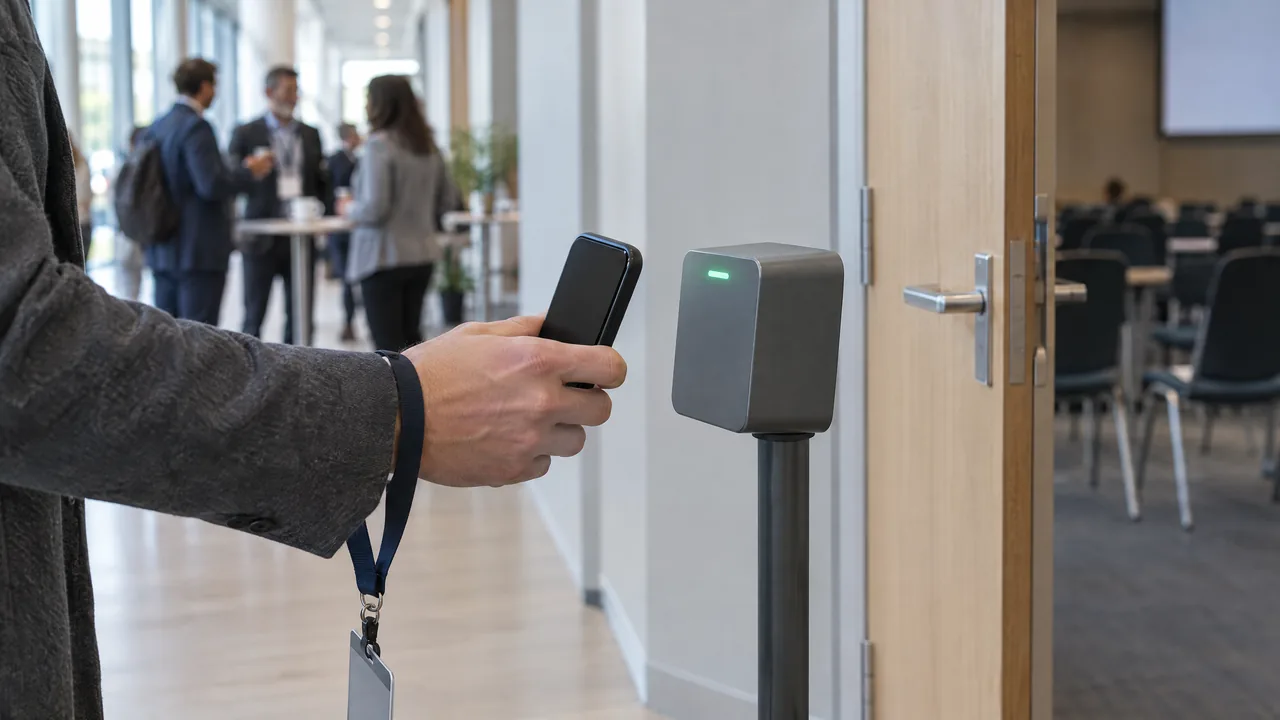
A member of a professional body in a rural region has not been to the annual general meeting since 2021. She did not lose interest. The meeting is a two-day trip, her employer stopped covering it, and the one vote she cares about happens at eleven on a Friday morning. She still pays her subscription.
Members in this position illustrate why associations consider hybrid formats. Membership dues account for only 32 per cent of association revenue on average, according to an ASAE analysis of more than 6,000 association tax filings published in July 2026. The annual meeting is therefore not a pleasant extra on the calendar. It carries a large share of the budget and almost all of the value members can actually see.
The person who has to defend that value is usually a volunteer: an honorary treasurer or board member who stands up once a year and explains why the subscription is going up. For associations, the value of hybrid participation lies especially in quorum and membership renewal. This guide examines those benefits alongside audience reach.
What Are the Benefits of Hybrid Events for Associations?
Hybrid events give an association four things a purely in-person meeting cannot. Members who cannot travel can still vote, which protects quorum and makes decisions more representative. Members who already pay for education can collect it without a flight, which is the benefit most directly tied to renewal. Volunteers spend less of their scarce time on room logistics and more on programme. And the association gains a year of contact with its members instead of two days of it.
A larger audience can be useful, but headcount alone says little about member value. Look at whether members voted, learned something useful and connected with their peers.
The rest of this article works through those benefits in the order they matter to an association balance sheet, and ends with the governance question that decides whether any of it is even permitted.
Why Member Participation Matters More Than Viewer Numbers
Audience growth is a common starting point for a hybrid business case, but associations need to examine it in the context of membership. General hybrid guides, including our own overview of the pros and cons of hybrid events, rightly list audience growth first. For a commercial conference selling tickets, that is correct: every additional viewer is revenue.
An association sells something else. Its audience is mostly closed, defined by the membership register, and it already has the contact details of everyone it wants in the room. Adding 300 unregistered viewers to a livestream does not grow a membership base that is limited by profession, region or qualification. It grows a number in a report.
What does move is the share of existing members who take part. That is a different metric with a different owner. Member participation is relevant to both communication and association governance.
Quorum and Votes: the Benefit Nobody Puts in the Brochure
Participation becomes a hard number the moment the chair opens the formal business. Most association constitutions set a quorum for the general meeting, and most set it low precisely because getting members into a room is difficult. Every association that has ever adjourned a meeting for lack of numbers knows the cost of that rule.
Hybrid attendance changes the arithmetic, but only inside the rules your organisation already has. In England and Wales, the Charity Commission updated its guidance on charity meetings (CC48) on 19 July 2024 and now expects a governing document to state whether meetings may be virtual or hybrid, how notice is given, how voting works and how such a meeting is adjourned. The minimum standard it sets is blunt: all participants must be able to see and hear each other for decisions to be valid (Wrigleys Solicitors analysis, July 2024). In the United States, the position under Robert’s Rules of Order, 12th edition, is stricter than many boards assume. Electronic meetings are permitted only if the bylaws specifically authorise them, and the organisation is expected to adopt its own rules for recognition, motions, quorum and voting. Parliamentarian Jim Slaughter makes the same point about member votes in practice: electronic balloting outside a meeting generally needs prior written consent from members, and bylaws can restrict or forbid proxies entirely (Law Firm Carolinas, March 2025).
None of this is legal advice, and the details differ by jurisdiction and by organisation. The practical instruction is the same everywhere. Read your own governing document before you read a vendor brochure.
Why the annual meeting carries so much weight
Three numbers that explain the association case for hybrid
Members Who Cannot Travel Are Not a Minority
The renewal figure above is the one to hold on to. A median renewal rate of 84 per cent sounds healthy until you look at first-year members, who renew at 74 per cent, and at the reason given most often for lapsing: 63 per cent of missed renewals come down to members not understanding the value of membership (Marketing General Inc. Membership Marketing Benchmarking Report, 2025). Value that a member has never personally experienced is hard to understand. The annual meeting is usually the only place that experience is on offer.
How many members are shut out by travel is easy to underestimate. The Medical Library Association ran its 2022 annual meeting in hybrid form and recorded 1,250 participants, of whom 575 were on site and 675 joined online (Pionke and Aaronson, Journal of the Medical Library Association, 2023). More than half the audience of a well-established professional meeting was in the group that would otherwise not have been counted at all. The pattern is not limited to one field. A study of scientific societies in Nature Sustainability found that virtual formats increased both total participation and the share of early career participants and participants from institutions without travel budgets (Skiles and colleagues, Nature Sustainability, 2022).
Cost is a significant barrier, and it is becoming more pressing. Freeman’s 2026 trends research, based on responses from nearly 20,000 people, identified value for cost as the single biggest barrier keeping potential attendees away (Freeman, May 2026). For an association, that cost sits on the member’s own employer, which is the one budget an association cannot lobby.
Meanwhile the industry expectation is quietly shifting back. In PCMA’s 32nd Convene Meetings Market Survey, 28 per cent of planners expected growth in digital attendance for 2026, up from 15 per cent the year before (PCMA, December 2025). Digital participation remains relevant beyond the pandemic.
Which Parts of an Association Event Belong Online
Not every part of an association programme works equally well online. The useful question is not whether to run a hybrid event but which blocks of the agenda earn a second channel, and the honest answer differs by block.
| Format | What the member gets from it | Worth running hybrid |
|---|---|---|
| General meeting, elections, votes | Voice and vote on subscriptions, statutes, board | Yes, this is the strongest case |
| Keynotes and plenary sessions | Positions, sector data, orientation | Yes, live or on demand |
| Training with credits or CPD points | A certificate the member can use at work | Yes, if your accrediting body allows it |
| Committee and working group meetings | Actual influence on association work | Yes, and often better than in person |
| Exhibition and sponsor area | Supplier contacts, market overview | Partly, only with scheduled meetings |
| Evening reception and informal networking | Trust, recruitment of volunteers | No, this is why people travel |
The row that surprises boards is the committee one. Working groups meet more often than the annual conference, run on volunteer time, and rarely need a room. Moving them online permanently, and using the annual meeting for the one session that genuinely benefits from a shared table, is usually a bigger win than streaming the keynote.
Plan Around the Time Volunteers Can Contribute
That win matters because volunteer time is the constraint most association plans ignore. In Germany, where more than 628,000 registered associations exist as of March 2026 (ZiviZ at the Stifterverband, reported September 2026), 57.4 per cent of paid and volunteer leaders say their administrative burden has grown over the past five years, with event requirements named among the heaviest areas (German Foundation for Engagement and Volunteering, Civey survey of 500 leaders, March 2026). The same pressure shows up in association management priorities across the sector: digitalisation ranked first among association trends at 66.1 per cent, ahead of member communication at 57.1 per cent (DGVM annual survey, 2025).
Hybrid can make this worse or better, and the direction depends entirely on whether you run one event or two. Two agendas, two moderators, two sets of questions and a separate online programme roughly doubles the workload, which is the failure mode our hybrid event planning guide covers in operational detail. One agenda with a second channel does not. The honorary treasurer from the introduction does not have a spare evening for a parallel programme.
Protecting volunteer time should be part of the format decision.
Give Sponsors and Exhibitors Meaningful Meeting Opportunities
Hybrid sponsorship packages need a clear explanation of the value sponsors receive. Sponsorship already fell from 29.7 per cent to 25.3 per cent of non-dues revenue in the 2026 Association Benchmarking Report, a survey of 665 senior association professionals (Naylor, August 2026). A logo on a livestream alone can be difficult to value. Sponsors need a clear account of who they reached and what the placement achieved.
What a specialist supplier at an association congress actually wants is a conversation with a member who has a budget and a problem. That is a scheduling job, not a broadcast job. Rule based matchmaking, where the association defines who may meet whom and under which conditions, produces those conversations on both channels and leaves a record of which ones happened. At Converve we build that as a meeting matrix: members, suppliers and speakers sit in defined groups, meeting requests run inside your rules, and every assignment stays traceable when a sponsor asks what they paid for. The mechanics of that approach are the same ones we describe for B2B matchmaking generally, applied to a membership register rather than a visitor list.
For sponsors seeking business contacts, scheduled appointments provide a concrete benefit to report.
Planning and Running a Hybrid Annual Meeting
Once the sponsor question is settled, the rest is sequence. The five stages below are ordered by risk, not by convenience: the legal check comes first because everything after it becomes worthless if a decision is later challenged.
From the constitution to the follow up
Five stages of a hybrid association meeting
- Stage 1 Check the rules Read the governing document and the relevant national guidance on virtual and hybrid meetings. If it is silent, put the amendment on the agenda for this year.
- Stage 2 Name the tools The notice should state which platform is used for participation and which for voting, plus how members ask questions and raise motions.
- Stage 3 Build one agenda One programme, one chair, one question queue fed by both rooms. Give online participants an active role in the discussion.
- Stage 4 Run one register Attendance, quorum and votes are counted in a single list covering both channels, with a clear record for the minutes.
- Stage 5 Keep it open Recordings, contacts and follow up meetings stay available afterwards, so the annual meeting becomes the start of a year rather than the whole year.
Stage two is where most disputes actually begin. A notice should name the platform and explain how members can vote. Concrete instructions help members prepare and reduce uncertainty during the meeting.
What It Costs, and What It Is Compared Against
The cost objection is fair and usually arrives from the same volunteer board. Streaming, a technician, a second moderator and a platform licence are real money, and association budgets are tight. Rising event costs were the top challenge named by planners in the PCMA survey cited above (PCMA, December 2025).
The comparison that matters is not hybrid against a cheaper in person meeting. It is hybrid against what the association loses when a meeting fails to reach quorum, when new members do not experience the benefit, with first-year renewal at 74 per cent, or when a committee spends four volunteer evenings a year travelling to a two hour discussion. There is also a side benefit worth naming once: research in Nature Communications found that a hybrid conference with well chosen hubs and more than half the audience online can cut the carbon footprint by about two thirds (Tao and colleagues, Nature Communications, 2021). That potential reduction is relevant to associations with a sustainability commitment in their statutes.
If you are still choosing the platform layer under all of this, the software questions are covered separately in our comparison of association management software, in the split between association management systems and event platforms, and in the selection criteria for a virtual and hybrid event platform.
Which parts belong online is easier to decide once the whole year sits on one calendar: when the annual general meeting, the congress and the regional days are planned as one programme with shared member data, the members who cannot travel show up in the numbers rather than in complaints. How to build that programme is the subject of our guide to association event management.
For associations without their own office, the hybrid set-up often lands on an outside team: an association management company that books the streaming supplier, runs the platform and handles registrations. Who then owns the recordings, the attendee data and the supplier contracts is worth settling in advance, as we explain in what an association management company means for your annual meeting.
Accredited training is the one block where the hybrid decision is not yours alone. A streamed session only earns credits if the accrediting body accepts how you verify online attendance, so the attendance records per session matter even more than in the room. How deadlines, sponsor separation and credit tracking fit together for a congress we explain in our guide to CPD and CME accreditation for conferences.
Frequently Asked Questions About Hybrid Events for Associations
What are the benefits of hybrid events for associations?
Four, in order of financial weight. Members who cannot travel can still vote, which protects quorum at the general meeting. Members can collect the education and credits they already pay for, which is the benefit most closely linked to renewal, where the median rate is 84 per cent and 63 per cent of lapses are attributed to members not understanding the value of membership (Marketing General Inc., 2025). Volunteers spend less time on logistics. And the association stays in contact through the year rather than for two days. Larger audience numbers are a side effect, not the reason.
Can an association hold a legally valid vote in a hybrid meeting?
Usually yes, but only within its own rules. In England and Wales the Charity Commission guidance CC48, updated 19 July 2024, expects the governing document to cover virtual and hybrid meetings, notice, voting and adjournment, and requires that all participants can see and hear each other. Under Robert’s Rules of Order, 12th edition, electronic meetings need explicit authorisation in the bylaws. Check your own constitution and take advice before the notice goes out.
Do hybrid events increase association membership?
Rarely on their own, because association membership is limited by profession, region or qualification rather than by audience size. What hybrid changes is retention and participation among existing members. That is where the money is: dues make up only 32 per cent of association revenue on average (ASAE analysis of more than 6,000 filings, 2026), so the meeting has to justify both the subscription and the non-dues income around it.
How many members actually attend online?
More than most boards expect. The Medical Library Association’s 2022 hybrid annual meeting recorded 675 online participants against 575 on site, out of 1,250 in total (Journal of the Medical Library Association, 2023). Across the wider industry, 28 per cent of planners expected digital attendance to grow in 2026, up from 15 per cent a year earlier (PCMA 32nd Convene Meetings Market Survey, December 2025).
Which parts of an association programme should stay in person?
The evening reception, the informal recruitment of volunteers and any session whose value comes from an unplanned conversation. Those are the reasons members accept the travel. Formal business, keynotes, accredited training and committee meetings all transfer well, and committees usually work better online because they meet far more often than the annual conference does.
Does hybrid double the workload for the association office?
Only if you run two events. One agenda with a second channel, one chair, one question queue and one attendance register add a technical role, not a second programme. Two separate agendas with separate moderators and separate content roughly double the effort, which matters when 57.4 per cent of association and non-profit leaders already report a rising administrative burden (German Foundation for Engagement and Volunteering, Civey survey, March 2026).
Conclusion: Measure Participation and Member Value
Viewer numbers alone cannot show the full value of a hybrid annual meeting. Assess the outcomes that matter to your association: how many members were entitled and able to vote, how many collected a benefit they pay for, how many volunteer evenings were given back, and how many supplier conversations a sponsor can point to when the invoice arrives.
That is why the order in this article runs from the constitution to the platform and not the other way round. Check what your rules allow, decide which agenda blocks earn a second channel, keep one programme rather than two, and count decisions rather than viewers.
If part of your annual meeting is member and supplier meetings that have to be scheduled, documented and defensible, that is the workflow Converve has built for associations and hybrid formats for more than twenty years. Get in touch with Converve and we will walk through your annual meeting with you, agenda block by agenda block.