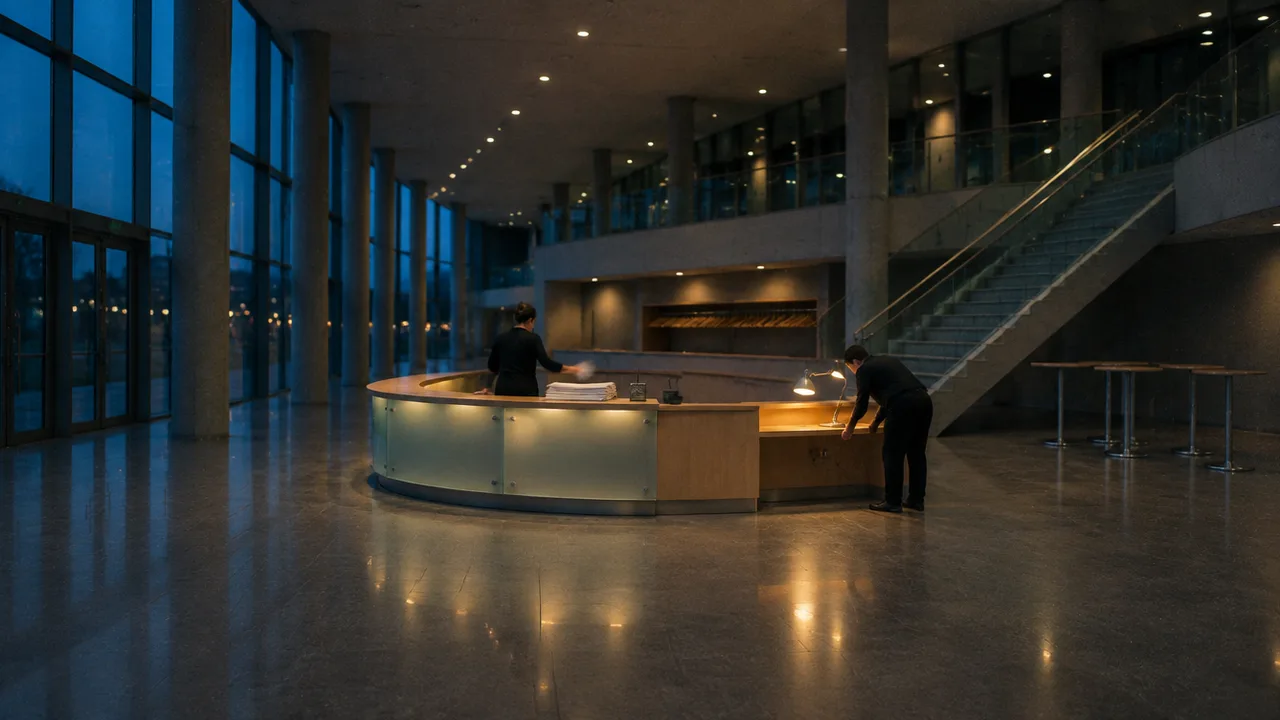
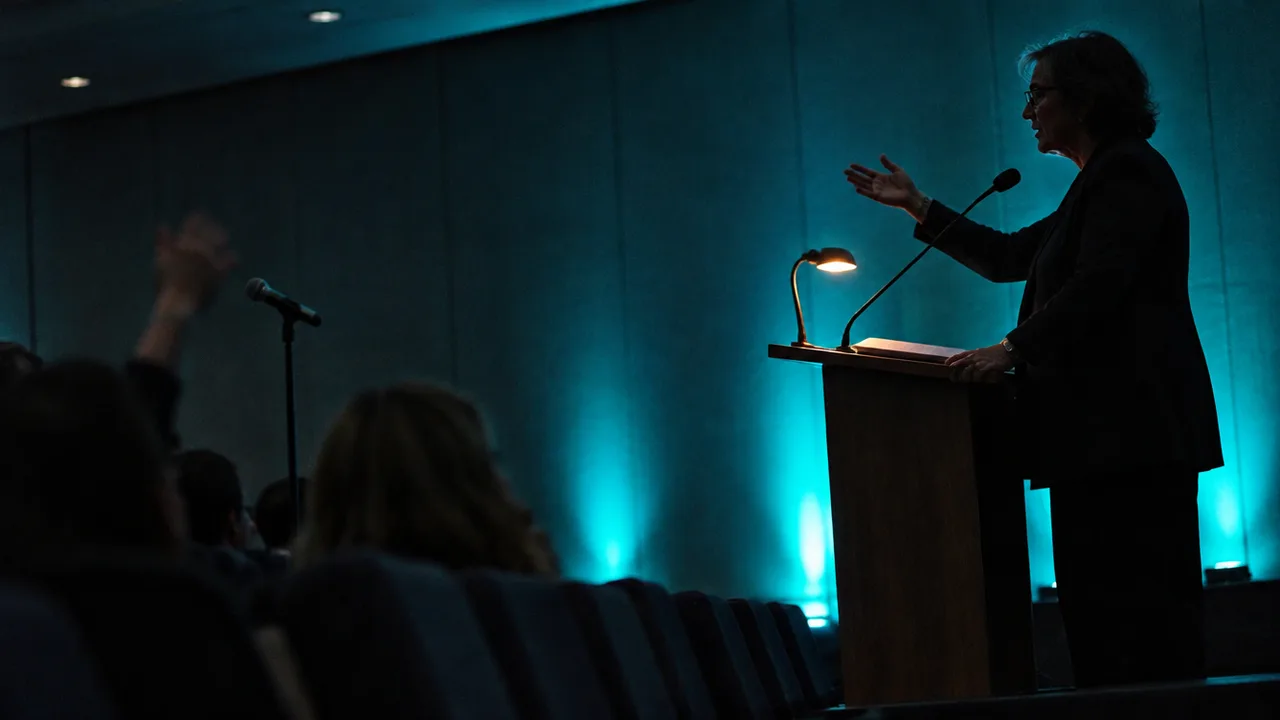
For its congress in Barcelona in April 2026, the ACM CHI Conference on Human Factors in Computing Systems planned about 180 student volunteer places. Each volunteer was asked for about 20 hours of work, in return for a waived registration fee, breakfast and lunch, a T-shirt and a thank-you party (CHI 2026, call for student volunteers, October 2025). That is roughly 3,600 hours of badge checks, session monitoring and wayfinding in a single week.
The Society of Behavioral Medicine (SBM) asked its student volunteers for one slot of 2.5 to 3 hours at its 2026 Annual Meeting in Chicago and refunded their registration fee afterwards (SBM, student volunteer programme, 2026). The hours and benefits differ substantially between the two programmes.
Set out the hours, roles and benefits before you recruit. If your association or scientific society offers registration, meals and access in exchange for volunteer work, make those terms clear. A promise of “plenty of students” from the local organising committee still needs to become a staffed shift plan.
What do conference volunteers do?
Before the congress manager counts helpers, she should separate two kinds of volunteer. Committee volunteers shape the congress over many months; how their decisions are split from the office is covered in our guide to the association event committee. This article is about the other kind: the people in matching T-shirts who run the congress floor for a few hours or days, usually students and early-career members.
The published calls of several societies describe much the same set of roles:
| Role | Typical tasks | What the briefing must cover |
|---|---|---|
| Registration desk | Hand out badges and lanyards, answer first questions, keep queues moving | Badge types, who may change a registration, the escalation contact |
| Session room | Check that speakers are present, keep time, count attendance | Timing signals, how to reach the technician, the counting method |
| Speaker ready room | Help presenters check and upload their files | Upload process and file deadlines |
| Wayfinding and information | Guide delegates to rooms, keynotes, lunch and lost property | Venue map and the programme changes of the day |
| Posters and demos | Number poster boards, help with set-up and tear-down | Floor plan and set-up times |
| Social programme | Check-in at breakfasts and receptions | Guest lists and who may enter |
The tasks come from the calls of CHI, SBM, the European Astronomical Society (EAS) and the Entomological Society of America (ESA). CHI adds the job nobody plans for: solving on-the-spot problems, such as a missing presenter or a broken microphone. Presenter files are the most time-critical of these tasks, which is why the room behind them deserves its own plan, set out in our guide to the speaker ready room.
The deal: hours in return for registration
Each of those roles costs hours, and every society prices them differently. The minimum each programme asks for its main benefit shows how wide the range is:
Hours of volunteer work asked in return for registration benefits, six programmes
ESRS figure calculated from 4.5 hours a day over the four congress days.
Twenty hours at a five-day conference is a part-time job inside the congress. Three hours leaves the congress almost untouched. The 20-hour deal suits doctoral students who could not otherwise afford the trip. The three-hour deal suits members who came to present and want to give something back; SBM even requires an accepted abstract. Choose the model from the hours your congress needs, not from what the last host city offered.
The benefits beyond registration shape the deal as well: meals at CHI, session access and a free membership for the following year at ESRS, social events and contact with senior researchers at CSCW. None of these programmes covers housing or travel.
For the board, those hours are easy to overlook. Independent Sector, a US non-profit network, values one volunteer hour in the United States at 36.14 dollars for 2025 (Value of Volunteer Time, April 2026). Applied to the CHI figures, 3,600 hours would be worth about 130,000 dollars. It is a US benchmark, not income, but a useful line in the congress report.
Volunteer, not unpaid staff
Because the deal includes benefits, the line to employment needs care. In the UK, GOV.UK says volunteers are not paid for their time and that expenses are usually limited to food, drink, travel or equipment. It warns that any other payment, reward or benefit in kind, or the promise of future paid work, may make someone an employee or worker (GOV.UK, Volunteer opportunities, rights and expenses, accessed 23 November 2026). In the United States, the Department of Labor’s Fact Sheet 14A describes volunteers at non-profits as people who serve freely and without contemplation or receipt of compensation. It adds that individuals generally may not volunteer in commercial activities run by a non-profit (Fact Sheet 14A, August 2015).
Whether a waived fee or a free membership counts as a reward depends on local law and on your set-up. This is not legal advice; have the arrangement checked locally, especially if a PCO (professional congress organiser) or a commercial partner runs parts of the event.
Build the shift plan from the programme
Once the deal is fixed, the congress manager counts positions, not people. Take the programme grid and list, for every time block, the stations that must be staffed.
Picture the first morning of a congress with eight parallel session rooms. Registration opens at 7:30, the opening keynote starts at 9:00, and most delegates arrive in those ninety minutes. That block may need ten people at the desk and in the foyer. A Wednesday afternoon needs one person per session room and two floaters. Five rules turn that count into a plan:
- Fill the peaks first: registration openings, poster set-up and the move into the opening plenary are the blocks that fail visibly.
- Keep shifts short: ESRS works with 4.5 consecutive hours a day, AASLH and NCPH with one four-hour shift. CHI shifts can start at 6:30 a.m. and end at 8 p.m., so a 20-hour commitment has to be spread over the week.
- Overlap the handovers: plan fifteen minutes in which the outgoing and the incoming volunteer are both at the station.
- Hold floaters in reserve: a few people without a fixed station cover no-shows and surprises. EAS welcomes extra shifts for last-minute needs.
- Protect what volunteers came for: AASLH and NCPH do not let volunteers attend sessions during their shift, so leave the sessions they care about free.
How many check-in stations the desk needs at peak time is a calculation of its own, which we set out in our guide to event check-in and badge printing.
Recruiting: where volunteers come from
The shift plan tells you how many people to recruit. The host city usually decides where they come from. Students of the local universities can attend without travel or hotel costs, which is why ESRS gives priority to applicants living in the Netherlands when it has more applicants than places. CSCW 2026, held in Salt Lake City, reserves part of its places for applicants based in Utah.
Fairness is the second design question. A first-come rule rewards whoever reads the newsletter first. The calls show three better options:
- A lottery for most places: at CHI 2026, 60 per cent of places went to the general lottery, 20 per cent to students recommended by committee members and 20 per cent to returning volunteers.
- Quotas for groups the society wants to reach: CSCW 2026 splits its places evenly between returning volunteers, local applicants, first-time volunteers, applicants from the Global South and a random lottery.
- Clear conditions: membership of the society (SBM, AASLH and NCPH, ESA), a minimum age of 21 (AASLH and NCPH) or 18 (ESRS), and a limit of two students per school (AASLH and NCPH).
If a local organising committee recruits for you, put the number, the roles and the deadline into its written mandate, as described in our guide to the local organising committee. “Plenty of students” is not a shift plan.
The timing follows from the selection model. CHI opened enrolment on 15 October 2025 for a congress in April, announced results on 26 January and gave volunteers two weeks to accept before places moved to the waitlist.
A volunteer programme from the first call to the thank-you
- 6 months Define roles and the deal Count positions from the programme grid and decide hours, benefits and conditions.
- 5 months Open the call Publish roles, hours, benefits and the selection rule in one place.
- 3 months Select and confirm Run the lottery or selection, set an acceptance deadline and keep a waitlist.
- 6 weeks Publish the shift plan Let volunteers swap within rules before the plan is fixed.
- 2 weeks Send the briefing pack Venue map, contacts, code of conduct and the role sheet for each station.
- Day before Hold the orientation Walk the venue, test the radios and introduce each shift lead.
- Within 4 weeks Deliver what you promised Refunds, certificates and a personal thank-you go out on time.
Brief every volunteer before the first shift
Recruitment ends with a list of names; the briefing turns that list into a team, and the larger programmes make it mandatory. ESA requires a 30-minute training before the first shift, even for people who have volunteered before. CHI asks volunteers to arrive a day early for orientation, and ESRS holds a compulsory kick-off and venue walkthrough the day before Sleep Europe opens.
Picture 10:40 on the second day. A session chair waves from the front row because the second speaker has not arrived. A briefed volunteer knows that the speaker ready room has the arrival list and a radio. An unbriefed one goes looking through the coffee break. The difference is twenty minutes of the programme.
A good briefing answers six questions for every station:
- Whom do I call, and on which number or radio channel?
- What may I decide myself, and what do I pass on? Refunds, registration changes and programme changes stay with staff.
- What does the code of conduct say, and how do I report an incident? The code applies to volunteers as much as to delegates, and our guide to the conference code of conduct shows who takes a report and who decides.
- How do I handle personal data at the desk? No photos of lists, no badges for names that are not registered.
- Where do I eat, rest and leave my bag?
- How do I sign in and out?
The last question matters more than it looks. SBM asks volunteers to sign in at the registration desk before each shift and to sign out afterwards. Volunteers who do not sign out, or who leave their station early, are not reimbursed.
Recognition: deliver your side of the deal
The trade has two sides, and the society’s side is delivery. SBM refunds the registration fee within four weeks after the meeting, once it has confirmed that duties were completed. A refund that arrives months later costs more goodwill than the fee is worth.
Recognition does not stop at the benefit. A certificate with hours and roles helps students with applications. The thanks itself should come early and personally: our guide to thank-you emails after an event recommends a message from their direct lead on the same evening. Invite the best shift leads back as team leaders.
Volunteering is also a way into the society. A student who ran the registration desk may have met more members in three days than many first-time delegates, and that contact is the natural start for the early-career offers described in our guide to young professionals programmes. This year’s volunteers are next year’s members.
Solution: in Converve’s registration, tickets are set up per participant group with their own price and quota, and promo codes are available. Volunteers can therefore be registered as their own group, with the agreed benefit attached to their ticket rather than handled by email. Each ticket includes the invitation to register on the event platform, and the QR badge check-in that volunteers run at the desk works from the same data. How associations use this for their congresses is shown on our solution page for associations.
Conclusion: write the deal down
Build the shift plan from the programme, agree how many hours each volunteer will work and publish what they receive in return. Use clear recruitment criteria, brief everyone before the first shift and provide the benefits you promised.
If you are planning an association congress and want to see how participant groups, tickets and check-in can be set up in one system, get in touch with Converve.
Frequently Asked Questions
What do volunteers do at a conference?
They staff the registration desk, monitor session rooms, help presenters with their files, guide delegates, help set up posters and demos and check guests in at social events, according to the calls of CHI 2026, SBM 2026, EAS 2026 and ESA.
Do conference volunteers get free registration?
Often, but the deal varies. CHI 2026 waived the registration fee for about 20 hours of work, SBM 2026 refunded it after one slot of 2.5 to 3 hours, and ESA pays up to 150 dollars towards registration for at least six hours. Some programmes add meals, session access or a year of membership.
How many hours should a conference volunteer work?
Published programmes range from one slot of 2.5 to 3 hours (SBM 2026) to about 20 hours (CHI 2026, CSCW 2026). Keep single shifts to around four or five hours; ESRS works with 4.5 consecutive hours a day, AASLH and NCPH with one four-hour shift.
How do you calculate how many volunteers a conference needs?
Count the stations to staff in each time block of the programme, fill the peak blocks first and add floaters for no-shows. Divide the total hours by the hours each volunteer commits.
Are conference volunteers employees?
Not if the arrangement is genuine volunteering, but benefits can blur the line. GOV.UK warns that a reward or benefit in kind may make a volunteer a worker, and the US Department of Labor describes volunteers as serving without compensation (Fact Sheet 14A, 2015). Have the arrangement checked locally.